

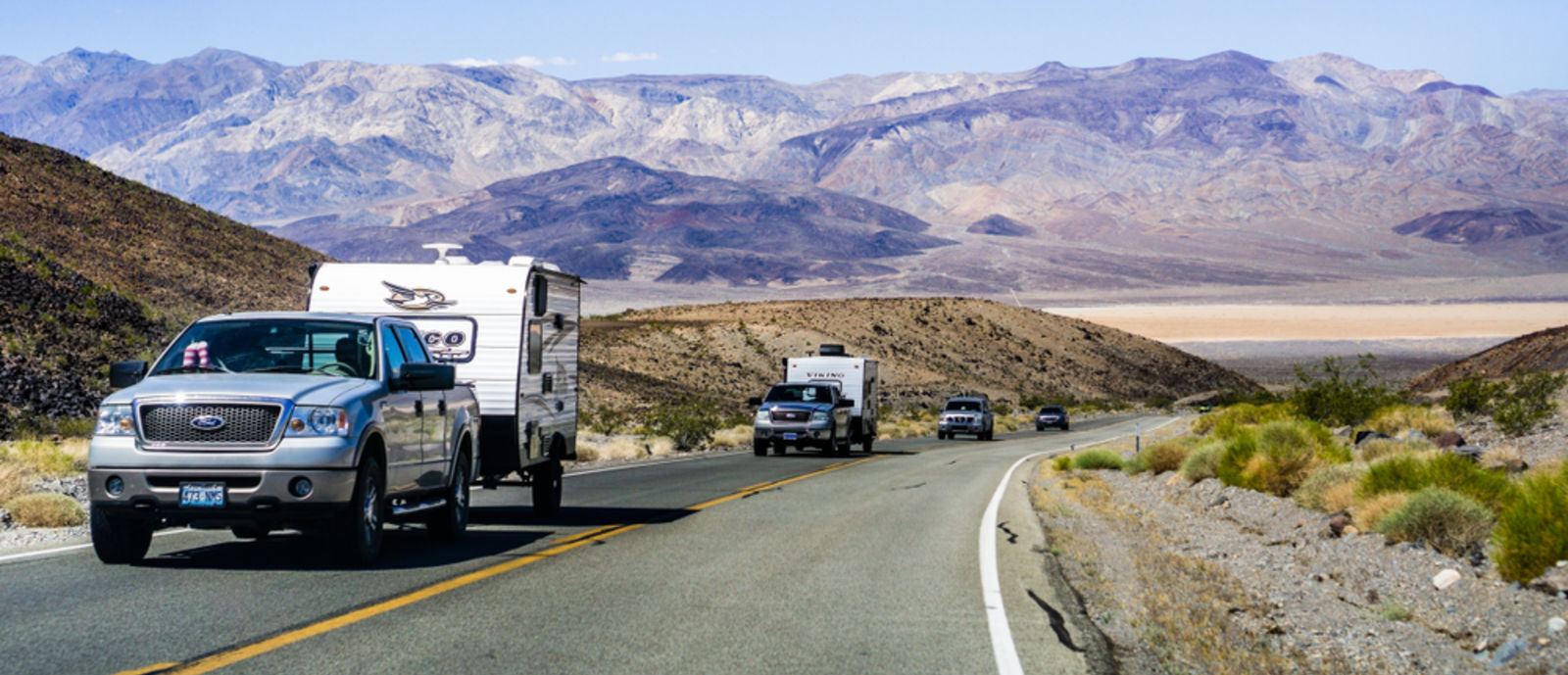

Towing an RV requires careful preparation, the right equipment, and adjusted driving habits to ensure safety and stability on the road. Before hitting the road, it is critical to know your vehicle's limits, choose the correct hitch, and load the trailer properly to prevent sway. Once underway, drivers must allow for longer stopping distances, make wider turns, and practice maneuvers like backing up to build confidence. Regular inspections of the hitch, tires, and electrical systems are also necessary for a successful trip.
Top Tips for Safe Hitching and Towing
1. Preparation and Weight Management
-
Know Your Vehicle's Towing Capacity Check your vehicle's owner's manual or the sticker on the driver's side door frame to find its maximum towing capacity. You must stay within this limit to prevent safety issues like vehicle damage and braking problems.
-
Calculate All Weight Account for the RV's "dry" weight, the weight of all cargo loaded inside, and the weight of passengers and gear in the tow vehicle.
-
Load Correctly Place heavy items low and toward the front of the RV to keep the weight centered and balanced. This even weight distribution improves handling and reduces the risk of sway.
2. Choosing and Connecting the Hitch
-
Select the Right Hitch For most RVs, a weight-distributing hitch is recommended as it helps distribute the trailer's weight more evenly across both the tow vehicle and the trailer, which makes the ride smoother and more stable.
-
Level the Trailer Ensure the trailer rides as level as possible by selecting a ball mount with the correct rise or drop to match your truck's hitch receiver to the trailer's coupler.
-
Double-Check Connections Before every trip, double-check all connections, including the coupler, wiring, and the WDH spring bars.
-
Cross Safety Chains The safety chains must be crossed under the trailer tongue and securely connected to the tow vehicle.
3. Driving and Emergency Maneuvers
-
Practice Driving Spend time practicing maneuvering—especially backing up, turning, and parking—in an empty parking lot to get comfortable with how the RV handles.
-
Increase Stopping Distance Since braking distances are significantly longer when towing, leave extra space between your vehicle and the one ahead of you. Anticipate stops and begin braking sooner than you would normally.
-
Control Trailer Sway Crosswinds, high speeds, and large trucks can trigger sway. If you experience sway, take your foot off the gas and manually apply the trailer brakes using the brake controller (if equipped).
-
Drive with Caution Keep a moderate speed, make turns and lane changes gradually, and be mindful that your vehicle will have different acceleration and handling characteristics.
-
Be Mindful of Height RVs are tall, so be aware of low-clearance areas like bridges or tunnels, and plan your route accordingly.