




Reliable internet has become as essential to modern RV travel as a good cup of coffee in the morning. Whether you’re working remotely, streaming your favorite shows, or keeping in touch with family, staying connected on the road can be a challenge. Many travelers rely on their phone’s hotspot, but there’s a growing range of RV-specific internet options that provide stronger, more reliable connections.
What Is an RV Wi-Fi Router?
An RV Wi-Fi router is a device built specifically for travelers who want consistent, high-speed internet while on the move. It works similarly to a home router but is designed for mobility, leveraging either cellular networks or local Wi-Fi signals from campgrounds, rest stops, or other hotspots to provide internet access.
These routers can connect multiple devices at once — laptops, smart TVs, tablets, and phones — making them ideal for RVers who work remotely, travel with family, or simply want a dependable connection.
RV Wi-Fi Router vs. Mobile Hotspot: What’s the Difference?
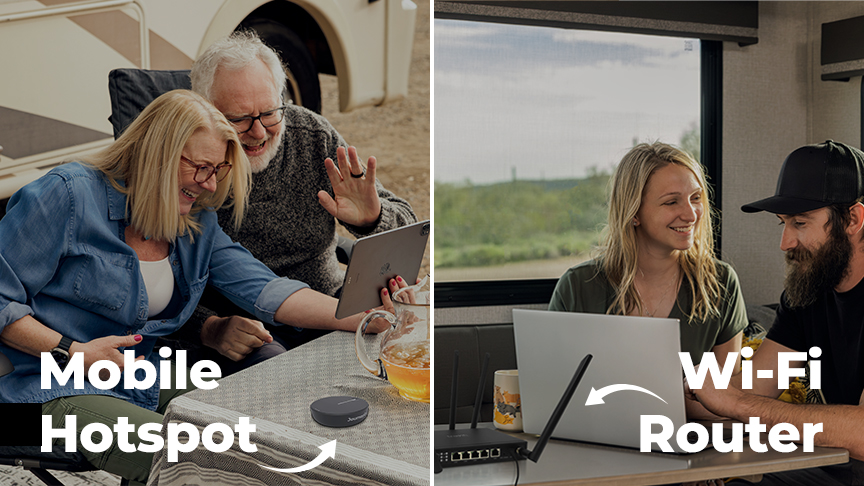
Both RV Wi-Fi routers and hotspots can get you online, but they differ in power, range, and connectivity. A mobile hotspot is a compact, portable device (or even your smartphone) that uses cellular data to create a Wi-Fi network. It’s perfect for short trips or light browsing, but it can be limited by the number of devices it supports, and some only connect to one data provider.
An RV Wi-Fi router, on the other hand, is designed for heavier, long-term use. Many models can connect to multiple network types (both public Wi-Fi and cellular) and broadcast stronger signals across larger spaces — a must-have for families or digital nomads.
Hotspot advantages:
- Portable and user-friendly
- Great for solo travelers or short-term trips
Router advantages:
- Wider range and more stable connection
- Supports multiple devices simultaneously
- Often compatible with both Wi-Fi and cellular networks
What's the difference between using the hotspot on my phone and a dedicated RV Wi-Fi hotspot?
Using your phone as a hotspot is fine for quick access, but it’s not a sustainable solution for full-time or long-term travelers. Smartphone hotspots often throttle speeds, limit data, and drain your battery quickly.
The TravlFi JourneyGo Hotspot, a dedicated mobile hotspot, is designed for continuous use and features embedded SIM (eSIM) technology — meaning it can automatically switch between major networks to find the strongest signal without additional fees. That multi-carrier flexibility makes a noticeable difference when you’re camping in rural or low-signal areas.
Keep in mind:
- Phone hotspot plans usually cap data at 10–15GB per month
- Phones aren’t optimized for extended hotspot use, so speed and signal strength will typically be less than a dedicated mobile hotspot
- Battery drain and overheating can become issues on long trips
How to Get Internet in Your RV
There’s no one-size-fits-all answer to RV internet — the best setup depends on how you travel, where you go, and what you need to do online. Here are the main options:
- Campground Wi-Fi: Convenient and often free, but typically shared among many users, which can slow speeds.
- Cellular Hotspots: Portable and simple, though performance varies by coverage area.
- Mobile Routers: Stronger hardware and more flexible network connections, ideal for full-time RVers or those who work remotely.
If you’re looking for an example, routers like the TravlFi XTR Pro 5G Router are designed to deliver enhanced speed, range, and reliability on the road.
Choosing the Best RV Internet Solution
Before purchasing any device, ask yourself:
- How often will you be traveling?
- How many devices need to be connected at once?
- Will you be traveling within the United States?
- What do you need Wi-Fi for?
When comparing options, look for:
- Cellular compatibility: Ensure your device supports major U.S. networks.
- Signal-boosting capability: Some routers amplify weak signals in remote areas.
- Durability: Your gear should be able to handle the bumps and temperature shifts of RV life.
- Number of devices supported: Choose a device that can handle the number of devices you plan to connect, including phones, tablets, laptops, and smart TVs.
RV Wi-Fi FAQs
What is RV Wi-Fi?
RV Wi-Fi is a term for internet solutions that allow travelers to connect on the go. It typically involves a router or hotspot that taps into cellular networks or public Wi-Fi so you can browse, stream, and work from your RV.
Can I use my home Wi-Fi router in my RV?
Technically, yes—but it’s not ideal. Home routers aren’t built for mobility or changing signal strength. RV routers are designed to handle variable conditions and weaker signals while traveling. Also, many home internet companies require a permanent location, so you cannot move your device.
Is RV Wi-Fi fast enough for streaming?
In most cases, yes. Many RV routers can provide speeds suitable for HD streaming, depending on the strength of your signal and whether you’re using a 4G or 5G connection. Pairing a router with a signal booster can enhance performance in weaker areas.
How do I get internet access in remote locations?
When public Wi-Fi isn’t available, a router that connects to multiple cellular networks can help. Look for 4G or 5G compatibility and consider a signal booster to maximize performance.
How much data do I need for RV Wi-Fi?
It depends on usage. For basic browsing and email, a few gigabytes per month may suffice. For streaming or remote work, consider higher or unlimited data plans to avoid overage fees.
Final Takeaways
- RV Wi-Fi routers offer stronger connections, wider coverage, and support for more devices compared to standard hotspots.
- For frequent travelers or remote workers, a dedicated router is often the most reliable solution.
- Signal boosters and multi-network compatibility can make a major difference in rural or off-grid areas.
For RVers seeking flexible Wi-Fi, TravlFi offers travel-ready devices and flexible pay-as-you-go data plans.