
Travel Guides
Travel Guides
From Swamp to Salsa to Sunset: South Florida by RV
Explore Florida's famous historical landmarks and scenic outdoor destinations with this RV trip itinerary.

Overview
From the heart of the Everglades to the vibrant streets of Miami and the turquoise waters of Key West, South Florida is a journey best experienced by RV with its myriad campgrounds and RV-friendly stops. The open road connects some of the Sunshine State’s most iconic attractions—where history, culture, and nature meet under endless blue skies. Traveling by RV means you can start your mornings in the wild, spend your afternoons soaking up art and architecture, and end your evenings beachside, all without packing and unpacking a single suitcase.
Day 1
The Ah-Tah-Thi-Ki Museum near Lake Okeechobee
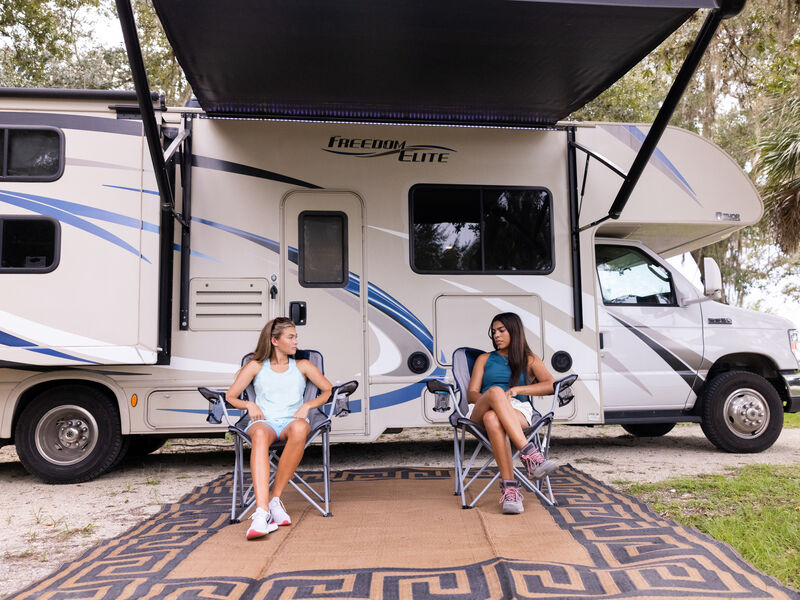
RV camping at Okeechobee Kissimmee Prairie Preserve State Park. Photo credit to Folklore / Visit Florida.
The Ah-Tah-Thi-Ki Museum
The Ah-Tah-Thi-Ki Museum in Clewiston, near Lake Okeechobee, is nestled in the heart of the Everglades on the Big Cypress Seminole Indian Reservation. The museum is home to more than 200,000 works of art and historic objects of the Seminole people, who have inhabited Florida for thousands of years.
Lake Okeechobee
After exploring the exhibits, unwind at nearby Lake Okeechobee, a 730-square-mile freshwater giant known for world-class bass fishing. Spend the afternoon casting a line or simply relaxing lakeside at camp—your RV parked beneath the shade of swaying palms.
Where to Camp:
Big Cypress RV Resort and Campground in Clewiston
Address: 30290 Josie Billie Hwy, PMB 1002, Clewiston, Florida 33440
Phone Number: (800) 437-4102Crooked Hook RV Resort in Clewiston
Address: Crooked Hook RV Resort, 51700 E US Highway 27, Clewiston, FL 33440
Phone Number: (863) 983-7112
Day 2
Whitehall, the Henry Flagler Museum in Palm Beach
Drive to Palm Beach and visit Whitehall, Henry Morrison Flagler's Gilded Age Mansion. Flagler, a railroad tycoon and co-founder of Standard Oil, was easily the most important figure in Florida history in the late 1800s and early 1900s. He fostered the development of the state’s agriculture and tourism industries, including Florida’s emergence as one of the nation’s top snowbird destinations. Flagler’s 75-room mansion is now a museum.
With your RV parked nearby, explore the manicured gardens, marble halls, and Flagler’s lasting impact on the state’s history before heading back to camp for an oceanfront sunset.
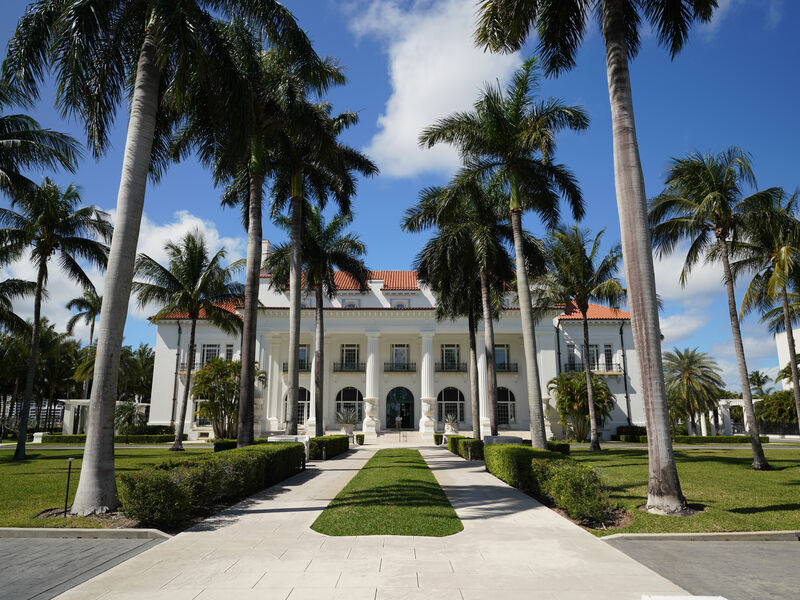
The Flagler Museum. Photo credit to CycleHere for Visit Florida.
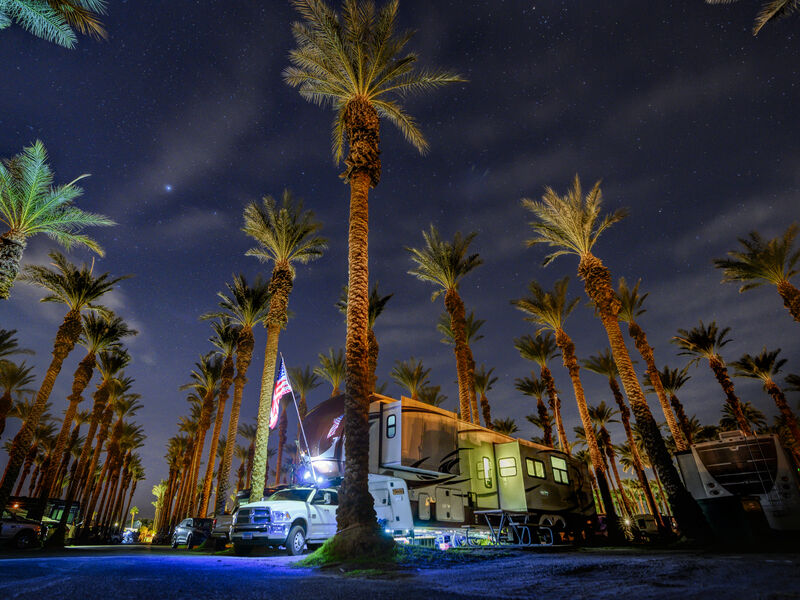
An RV camps overnight in a forest of palm trees.
Where to Camp:
Juno Ocean Walk RV Resort in Palm Beach
Address: 900 Juno Ocean Walk Juno Beach, Florida 33408
Phone Number: (561) 622-7500Yacht Haven Park & Marina in Ft. Lauderdale
Address: 2323 W State Rd 84, Fort Lauderdale, Florida 33312
Phone Numbers:
Toll Free— (800) 581-2322
Local— (954) 583-2322
Marina— (877) 445-2127
Day 3
Miami’s Art Deco District, South Beach, and Little Havana
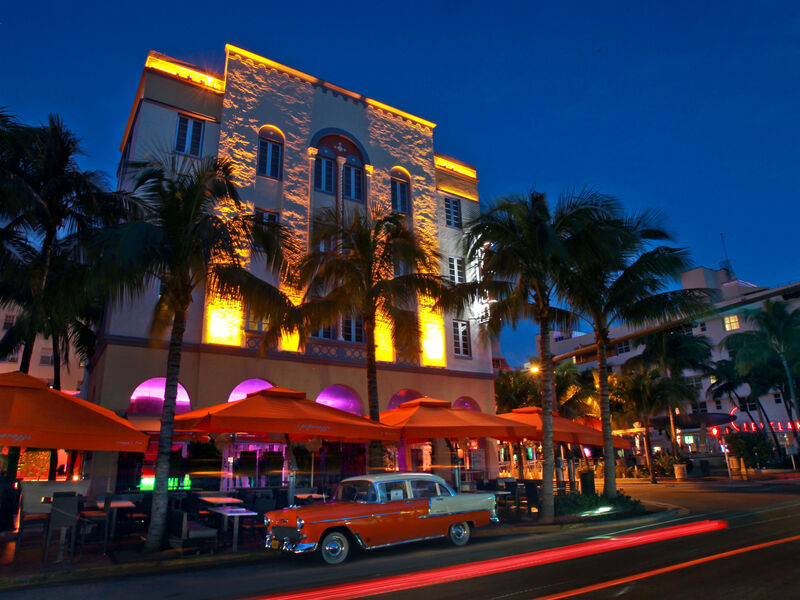
Art deco architecture. Photo credit to Visit Florida / Patrick Farrell.
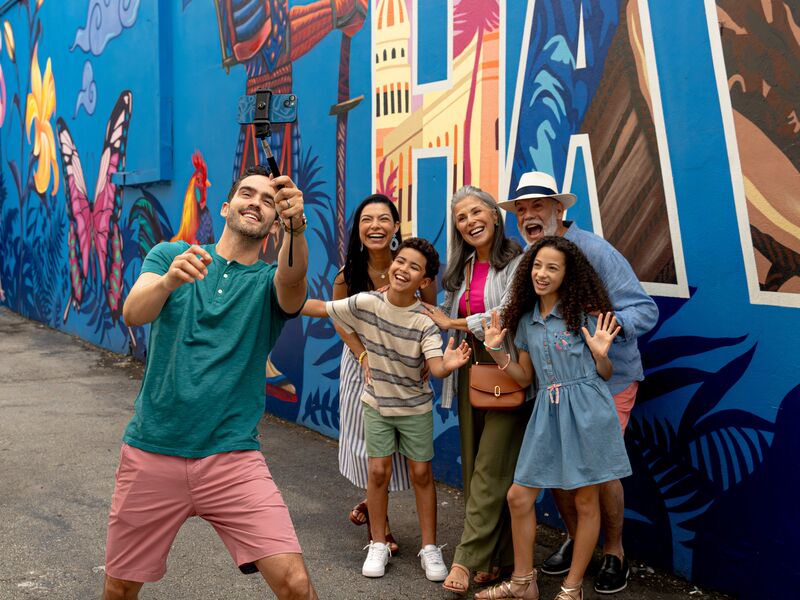
Little Havana mural. Photo credit to Merge Studios / Visit Florida.
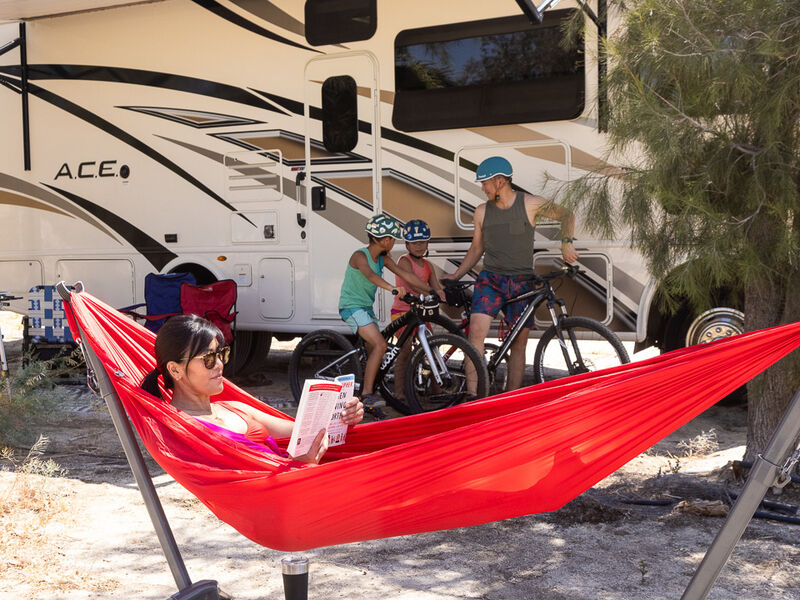
A family enjoys the great outdoors during their RV trip.
Miami’s Art Deco District
Miami's Art Deco District in South Beach has nearly 1,000 Art Deco buildings, the largest concentration of Art Deco buildings in the world. Built between the Great Depression and the early 1940s, these buildings are notable for their prominent geometric lines, sleek curves, chrome accents, and bright, eye-catching pastel colors. Both guided and self-guided tours are available.
South Beach and Little Havana
After having your fill of Art Deco architecture, relax on the sugar sands of South Beach for a few hours before heading to Little Havana. Miami’s famed Cuban district features great restaurants, stores, and entertainment venues, including places to dance Salsa.
Where to Camp:
Yacht Haven Park & Marina in Ft. Lauderdale
Address: 2323 W State Rd 84, Fort Lauderdale, Florida 33312
Phone Numbers:
Toll Free— (800) 581-2322
Local— (954) 583-2322
Marina— (877) 445-2127Encore Miami Everglades RV Resort in Miami
Address: 20675 SW 162nd Ave, Miami, FL 33187
Phone Number: (877) 570-2267
Day 4
Everglades National Park
No trip to South Florida would be complete without a visit to Everglades National Park, the largest subtropical wilderness area in the United States and the only place where American alligators and crocodiles coexist. The Everglades is about two hours from Miami, depending on traffic.
Traveling by RV makes it easy to access trailheads and visitor centers spread across this vast landscape—then return to the comfort of your home on wheels to rest before your next adventure.
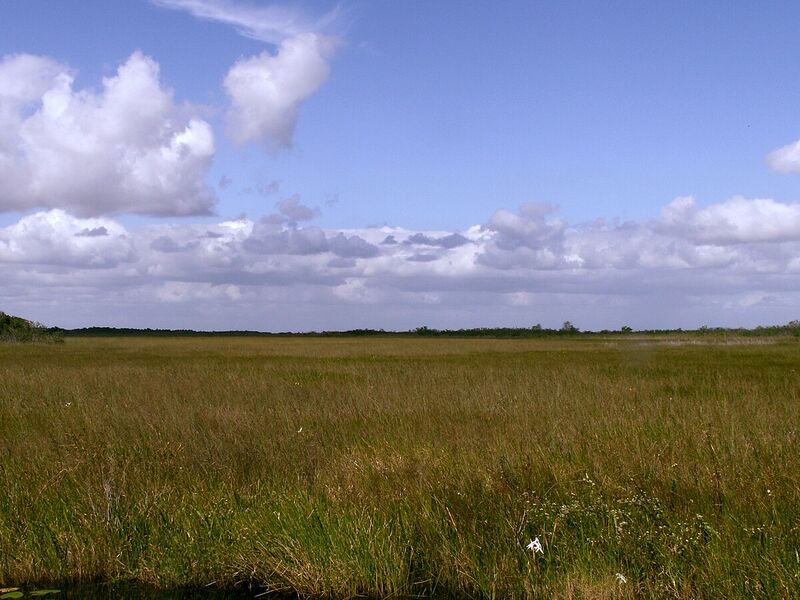
Sawgrass in the Everglades. Photo credit to Wikipedia.
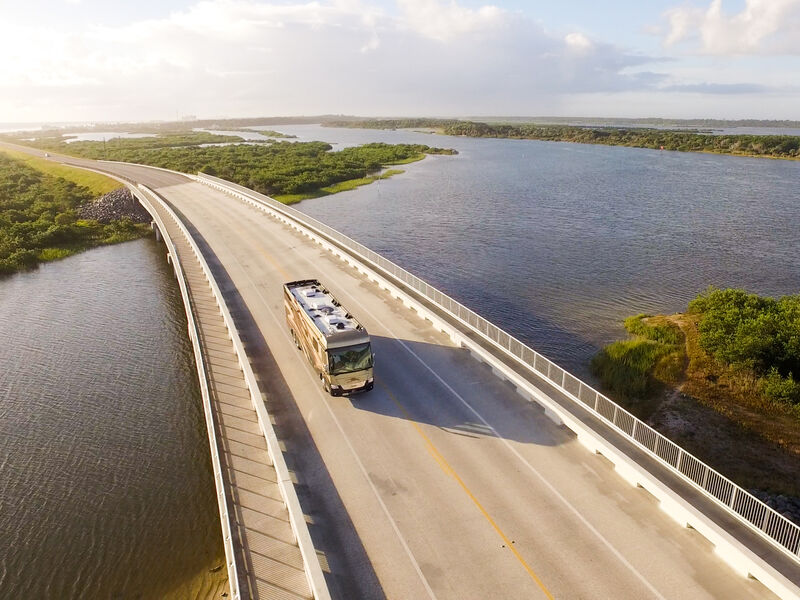
Travelers embark on the next part of the journey in their RV.
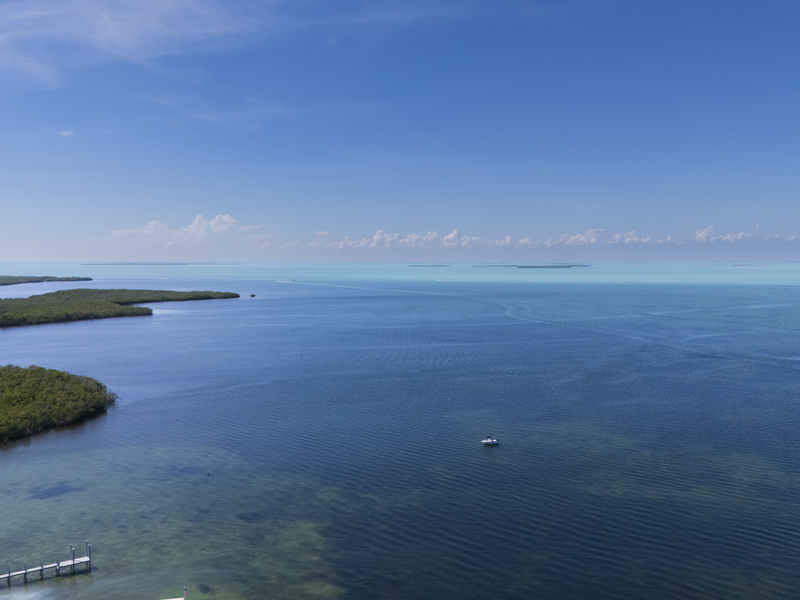
Islamorada Beach. Photo courtesy to Botbox Productions.
Where to Camp:
Sun Outdoors Islamorada in Florida Keys
Address: 87395 Old Hwy #1, Islamorada, FL 33036
Phone Number: (786) 841-0030
Day 5
Drive from the Everglades to Key West
Start your morning surrounded by Everglades wildlife, then drive south along the iconic Overseas Highway, one of the most scenic drives in America. In just four hours, you’ll cross 42 bridges on your way to Key West, the southernmost point in the continental U.S. Before enjoying the evening at Mallory Square where street performers, artists, and live music create a festive nightly sunset celebration, be sure to set up camp so that all you have to do when you return to your RV is crawl into bed!
Day 6-7
Ernest Hemingway’s Home, Harry S. Truman’s Little White House, and Fort Zachary Taylor
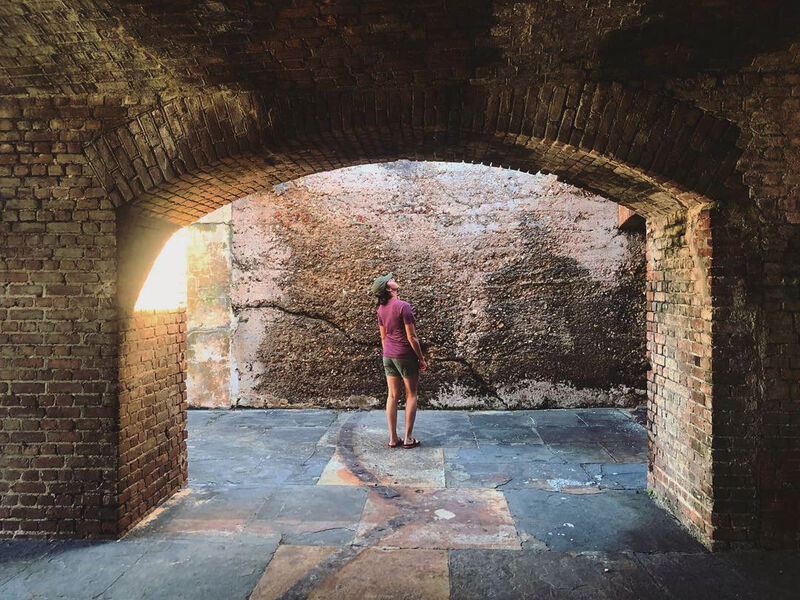
Fort Zachary Taylor Historic State Park. Photo courtesy to Visit Florida.
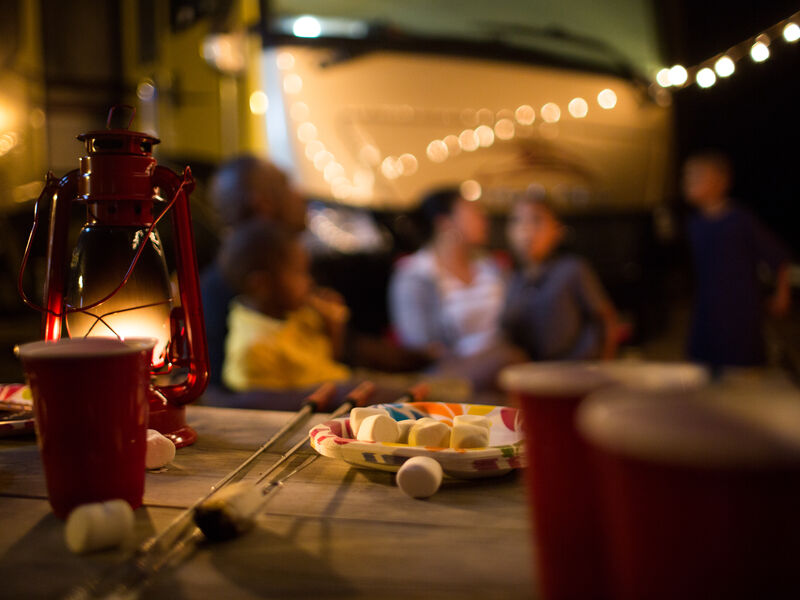
After a day of adventures, a family settles down at their RV to roast marshmallows.
The Ernest Hemingway Home & Museum
Several historical attractions that highlight different aspects of U.S. history from the late 1800s through the first half of the 1900s can be found in Key West.
The Ernest Hemingway Home & Museum has daily tours through both levels of the home as well as self-guided access to the back office where Hemingway wrote many of his classic books. Sloppy Joe's, the old bar where Hemingway gathered inspiration for some of his books, is also within walking distance of Hemingway’s home and is still in operation.
Harry S. Truman's Little White House
Harry S. Truman's Little White House was built in 1890 as naval officers' housing, but was later used by prominent visitors, including inventor Thomas Edison, scientist Edward Hayden, and six American presidents. Its most important usage was as the winter White House of Harry S. Truman, who spent 175 days of his presidency there from 1946 through 1952, during which time he faced the rebuilding of Europe, the Palestine question, changes in U.S. foreign policy, and America’s response to the Cold War.
Fort Zachary Taylor Historic State Park
Fort Zachary Taylor Historic State Park is also in Key West and features a historic fort with the largest collection of Civil War armaments in the U.S. as well as a scenic beach.
Where to Camp:
Boyd's Key West Campground
Address: 6401 Maloney Avenue
Key West, FL 33040
Phone Number: (305) 294-1465Sugarloaf Key / Key West KOA Holiday in Sugarloaf Key
Address: 251 State Road 939, Sugarloaf Key, FL 33042-0469
Phone Numbers:
Reserve— (1-800) 562-7731
Information— (1-305) 745-3549
Short on Time? Here’s Some Quick Tips:
Wherever you are in Florida, you’re never far from a lake or a beach or other scenic location where you can enjoy fishing, kayaking, paddle boarding, or simply enjoying the sun.
Final Thoughts
By having some much diversity in activities, landscapes, and distances, it is possible to develop travel itineraries that offer a mix of history, culture, and outdoor recreation that are unique to the Sunshine State.