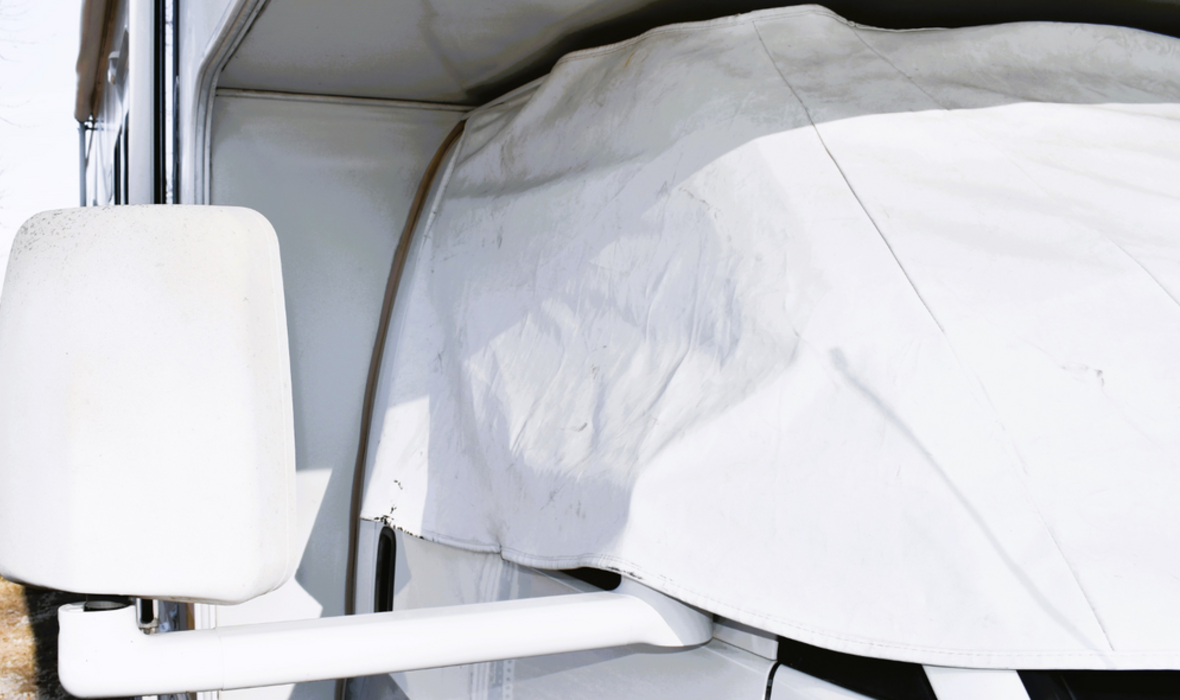

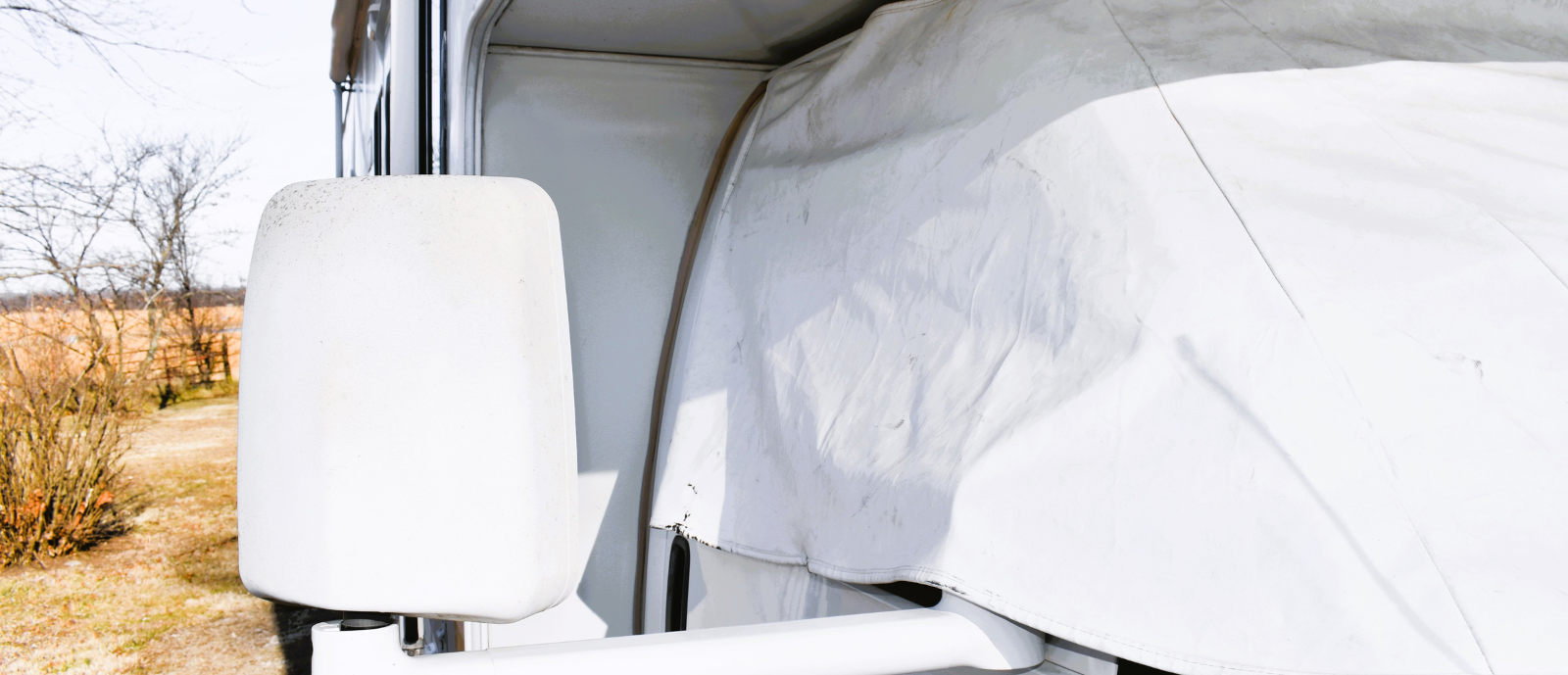

Whether you need an RV cover is a common question new—and even experienced—RVers ask themselves, especially as they prepare to winterize their RV. RV covers offer a layer of protection from the elements, especially if your RV will be parked outside during harsh winter weather. If you do opt to use one, it’s important to carefully consider your options to find the right cover for your RV, your budget, and your weather conditions.
This guide will explain more about the types of RV covers and important features, as well as how to install and maintain a cover. RV covers are an investment of time and money, but they also help protect the significant investment you’ve made in your RV.
Why Using the Right RV Cover Matters in Cold Weather
Depending on your location, your RV will be exposed to a variety of harmful weather conditions throughout the winter months. The biggest concern is the mixture of freezing temperatures and precipitation, resulting in snow, ice, or freezing rain. Heavy snow can put a lot of weight on the roof. Also, water from melting snow or freezing rain can accumulate in leaks and cracks and expand upon freezing, causing costly damage.
Snow and ice aren’t the only cold-weather foes. The sun is an overlooked source of damage, as harmful UV rays are ever-present. In addition to deteriorating the appearance of your RV exterior, UV rays can break down protective materials, leading to damage to the structural components underneath.
Additionally, condensation can build up in your RV as temperatures and humidity fluctuate, and any undetected leaks can allow water to seep in, leading to mold and mildew. If your RV is parked near trees, you may have branches that fall during the winter. Finally, there’s the damage ill-fitting covers can cause if they flap around in the wind, leaving abrasions on your paint and trim.
For these reasons and many more, it’s important to carefully consider which type of cover would be best for your RV.
Types of RV Covers & Materials
RV covers are designed in a variety of materials. Here are some pros and cons of the most common options:
Polypropylene covers
- Lightweight and easier to maneuver
- More affordable
- Good breathability helps prevent mold and mildew buildup
- Limited UV protection (look for covers with additional layers for added UV protection)
- Not waterproof
- Less durable
Polyester covers
- Increased durability
- Excellent UV protection
- Better at repelling water
- Pricier investment
- Less breathability if the airflow isn’t good
Polyethylene & vinyl covers
- Most durable
- Excellent waterproofing
- Strong UV protection
- Heavier and more difficult to maneuver
- Pricier investment
- May be stiff or brittle
Canvas & custom fabric options
- Natural material (when not mixed with synthetics) offers excellent breathability
- Eco-friendly, made from renewable materials with less/no plastics
- Durable
- Good UV protection
- Can be heavy or bulky to install
- Not fully waterproof and needs care for water resistance
Mixed/hybrid materials
- Using a mix of materials can help you get the features you need most
- May need more care due to the different materials and layers
- May be more expensive
Ultimately, finding the right RV cover will depend largely on your budget, climate, and individual preferences.
Fit, Design, and Features to Look For
Fit: When selecting an RV cover, it’s first important to get one that’s the proper size. In your mind, you might think of your travel trailer as one boxy rectangle, but it isn’t. This “box” might have an AC unit, antenna, Wi-Fi booster, awning, gutters, ladder, cargo rack, hitch, and more extending from it. Because of this, it’s important to get an RV cover that properly fits not only the length, width, and height of your RV but also accounts for any extensions.
Design: Next, consider how the seams, corners, and edges are reinforced. These are the areas where the cover is most likely to get damaged if it's not properly constructed or fitted. Finally, look at the various panels on the cover. Some models feature breathability panels to prevent moisture buildup, and you may desire access panels for entering your RV’s door and storage bays.
Features: Finding the right balance of UV resistance and waterproofing for your budget and climate is key. Read about these features for any cover you are considering to see if they match your typical weather patterns and your preferences.
Shopping for a Cover
Here are some manufacturers and RV cover suppliers:
Installation & Securing the Cover
Tips and Tricks
Once you have made the purchase, you next need to know how to install and secure an RV cover. Here are some tips to prepare for covering your RV:
- Prepare your RV for winter storage and properly winterize it so you won’t need to access it once it’s covered.
- Clean and dry your RV exterior (here is a source for cleaning products).
- Find a partner, if possible, since an extra pair of hands is helpful for this task.
- Consider watching online videos of experienced RVer installing covers, including any from your cover’s manufacturer, if available.
- Grab a ladder if your RV doesn’t have one—it is helpful if you can get on the roof of your RV, but there are ways to work around that if you cannot.
Cover Installation, Step by Step
Each RV cover is different, but here are the general steps for installing and securing an RV cover:
- Pad or cover any sharp corners or objects on your RV to protect the cover from tearing.
- Lift the cover onto the roof of your RV and unroll it from front to rear (alternatively, some people unfold it on the ground and use the supplied straps to gently lift each section of the cover to the roof).
- Drop the side panels off the RV, being careful to work your way back to your ladder.
- Zip any zippers on the panels.
- Use the supplied ties to properly secure the cover.
- Throw the underbelly straps under the RV to your partner and properly attach them.
- Do a thorough walk around to make sure the cover is snug but not overtightened.
Maintenance of the Cover & Upkeep During Storage
While your RV is covered, it’s important to periodically check and maintain the cover. Inspect it occasionally for tears or holes, and look to see if there are flapping spots rubbing on the RV exterior. If so, repair these and secure the cover. Also, check the ventilation panels to ensure they remain clear.
RELATED: Go RVing’s Complete Guide to Storing Your RV for the Winter
If you get heavy snow or ice, carefully remove it, if possible. Checking your cover’s integrity after winter storms is especially important. Finally, it’s important to check for mold and mildew under the cover. If you find either, it’s imperative to take the proper steps to remove the cover, air both it and the RV out, and thoroughly clean and dry both. You may need to consider using moisture absorbers or desiccants (here is a recommended source).
While you may not desire to wash the cover during winter storage, if you are using the cover for more than a few months, it is recommended that you properly clean the cover occasionally. You may also wish to rewash the RV exterior.
Removing the Cover & Getting Ready for Use
As the weather warms and you begin planning your first outing, make sure to invest the time in removing and properly storing your RV cover. First, properly clean the cover and allow it to thoroughly dry, so it’s ready for storage. Then, to remove your cover, you’ll follow the steps of installing it in reverse.
Finally, you need to store the RV cover. Unfortunately, once it has been unrolled for the first time, you may find it difficult to get the cover back into the bag or container supplied by the manufacturer, so you may need an alternative storage solution. Look for a cool, dry place to keep your cover until the next storage season.
Uncovering your RV for your next travel season is a lot like unwrapping a present. After a break from travel, you’ll be eager to get back on the road for more outings.