


You may wonder whether an RV actually saves you money—or causes you to spend more money…just on different things. The answer is pretty simple: most people save a significant amount when traveling by RV instead of flying and staying in a hotel.
Our family is no exception to this! To illustrate this, check out this budget breakdown of taking a week-long family trip to Mount Rushmore in South Dakota.
Trip Specs
One of our favorite RV trips was to South Dakota, visiting Mount Rushmore and Custer State Park. The money we saved by traveling in an RV as opposed to and camping at Blue Bell Campground in Custer State Park allowed us to also splurge on some pretty amazing experiences.
This estimate is based on a family of four traveling from the Philadelphia area in Pennsylvania and compares two travel options:
- Option 1: Flying, renting a car, and staying in a hotel
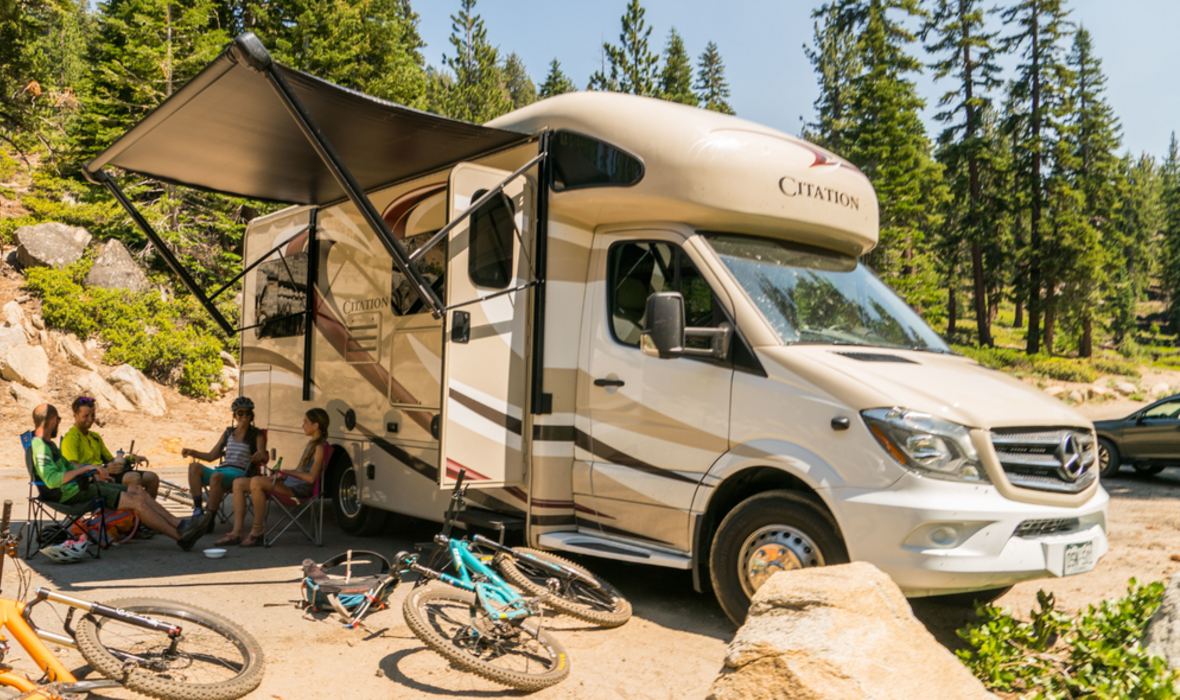
- Option 2: RVing with a travel trailer and camping at Blue Bell Campground in Custer State Park
Which do you think will come out ahead?
The Caveats
Before we compare the costs of flying versus RVing, I do have a few caveats to my budget estimates:
- Many elements of this trip could vary greatly by your specific travel dates, preferences, vehicle, and family dynamics.
- We picked the options our family would realistically choose for flights and accommodations.
- Because Rapid City Regional Airport is about 49 miles from Custer State Park, I assumed that flying travelers would need a rental car for the full week. The area does not have public transportation or ride share options.
- If you are RVing from Pennsylvania to South Dakota, you will almost certainly need extra travel days on both ends of the trip, which adds fuel, campground, and food costs, and we accounted for this.
- Costs are estimated based on current prices found online and a realistic summer travel scenario, but they do not include every possible booking fee or expense.
- Some destination costs, like Mount Rushmore parking and Custer State Park entry fees, apply no matter how you arrive, so I did not use them as major differentiators in the head-to-head comparison. Mount Rushmore does not charge an entrance fee, but parking is $10 per vehicle, and Custer State Park charges $25 per vehicle for a 1-to-7-day entrance pass.
Travel Cost Comparison: Flying Versus RVing
When looking only at transportation costs for this South Dakota trip, flying actually has an advantage. Current roundtrip economy fares from Philadelphia to Rapid City are available from about $400 per person. For a family of four, that puts airfare at roughly $1,600. Add in an economy rental car from Rapid City Regional Airport—currently around $45 to $56 per day—and travel costs for the flying option land around $1,900 before taxes and fees.
In an RV, the drive from Philadelphia to Custer is about 1,717 miles one way, or 3,434 miles round trip. If we add a modest amount of local sightseeing miles for exploring the Black Hills area, even with the national average gas price at $4.164 per gallon right now, fuel still comes in lower at about $1,500.
Final estimation: For this specific trip, Rving is lower than flying and renting a car, by roughly $400.

Accommodations Cost Comparison: Hotel Versus Campground
When traveling to Mount Rushmore and Custer State Park, many families choose to stay in either Keystone or Custer so they can easily visit the major Black Hills attractions. Hotel prices vary, of course, but a family-friendly option like the Holiday Inn Express in Custer shows current prices starting around $142 per night, while June averages run closer to the upper-$160s to low-$200s depending on the day of the week. That makes a realistic estimate for a decent family hotel about $175 per night, or roughly $1,225 for a weeklong stay.
Camping at Blue Bell Campground is dramatically cheaper. Blue Bell electric campsites are just $34 per night. That puts a seven-night stay at just $238. Blue Bell is also beautifully located near the Wildlife Loop and inside one of the most scenic state parks in the country, which adds a lot of value to the camping experience.
Even if you opted for a private RV park near Custer instead of camping inside Custer State Park, nightly rates would typically range around $55–$70 for full-hookup sites, or about $60 per night on average—still significantly less than nearby hotel options.
Ultimately, in the head-to-head comparison of hotels versus campgrounds, camping wins by a wide margin.
Final estimation: RVing saves about $140 per night, or nearly $1,000 in accommodation costs over the course of a week.
Considering Food Costs
Food is another major vacation expense, and this is one area where RVing can create very real savings for families. If you stay in a hotel, you may get a free breakfast, but lunches on the go and dinners out in gateway towns like Custer or Keystone add up quickly.
Families who don't own an RV typically eat out at least one additional meal per day compared to those who do. These costs escalate quickly; a family relying on restaurants for the majority of their meals will see a significant budget spike compared to travelers utilizing an RV kitchen for breakfasts, packed lunches, and simple dinners.
For a family of four, even a conservative estimate of $15 per person for a single meal adds up to $60 per day—or an extra $420 per week—spent on takeout alone.
That said, food spending depends heavily on your own habits. Some RVing families cook almost every meal, while others still enjoy restaurant dinners. Some hotel travelers save money with grocery-store breakfasts and picnic lunches. Food is absolutely worth thinking through, but because it varies so much by family style, we did not make it the deciding factor in this estimate.
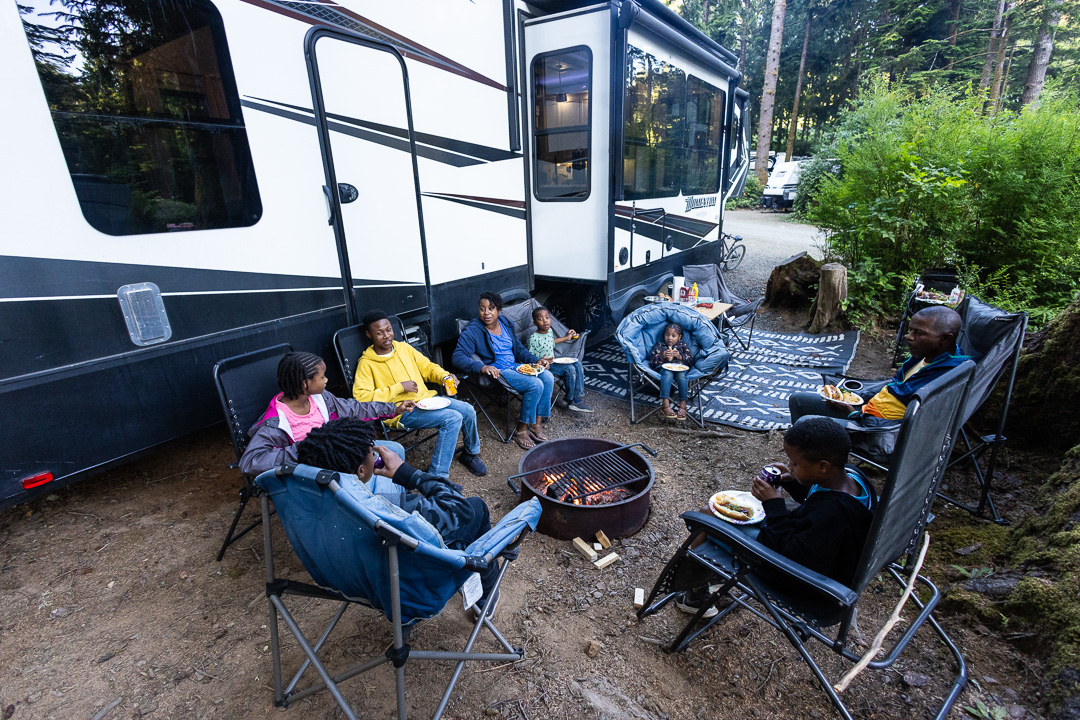
Our family tends to eat breakfast at the campsite, eat out at restaurants for lunch when restaurant prices are lower, and then enjoy grilling back at the RV for dinner. Many times our food costs on an RV trip are very similar to our food budget for a week at home.
Miscellaneous Expenses to Consider
When comparing RVing and flying, there are a few hidden costs and benefits worth noting:
- A campground can become part of your entertainment. Blue Bell Campground sits in Custer State Park near the 18-mile Wildlife Loop, so even a slower day in camp can still feel like part of the vacation.
- Mount Rushmore parking and Custer State Park entrance fees are shared trip costs that you will likely pay regardless of how you arrive.
- If you already own your motorhome, that changes the math considerably compared to renting one.
- If you are financing an RV, paying insurance, and maintaining it year-round, those ownership costs should also be part of your bigger picture budget.
The Bottom Line: Flying Versus RVing
If we do the math for travel and accommodations alone for a weeklong South Dakota trip from Pennsylvania, here are the rough totals for our family of four:
- Option 1 (Flying): about $3,000
- Option 2 (RVing): about $2,100
In this scenario, RVing still comes out ahead, but not by the huge margin you might see on a shorter trip. Because South Dakota is such a long drive from Pennsylvania, the fuel costs for a Class C motorhome are significant. Still, the savings on accommodations are large enough to help RVing win this comparison by roughly $900 overall. Those savings could grow even more if your family cooks most meals in the RV.
What About Road Tripping Versus RVing?
In this situation, another realistic option would be to skip both the flight and the motorhome and take a family crossover or SUV on the same trip. Truthfully, that option looks tempting at first because fuel costs would be much lower. Assuming a family vehicle gets about 28 mpg, the round-trip drive plus local sightseeing would cost only a few hundred dollars in gas. But once you add a week of hotel stays in the Black Hills and several hotel nights during the long drive to and from South Dakota, the costs rise quickly.
Using that kind of realistic estimate, a standard road trip in a family vehicle would likely land somewhere around $2,300. That still makes it more expensive than RVing, even though it uses much less fuel, because hotel costs eat away the savings.
What About the Intangible Costs?
For our family, RVing is not simply about the budget. We enjoy many non-monetary benefits of RVing, including:
- Campground atmosphere: There is a big difference between ending the day around a campfire under the pines and ending it in a hotel room.
- Connection to the destination: Camping in Custer State Park means waking up surrounded by the landscape you came to see, not driving into it from town every morning.
- Finding joy in the journey: Flying may get you there faster, but RVing makes the travel days part of the vacation.
- Having your own space: Your beds, your kitchen, your gear, and your routines all come with you.
- Being inspired to travel more often: When accommodations are this affordable, it is much easier to take longer and more frequent trips.
As you can see, RVing can be cheaper than flying, even on a long-distance trip like this one from Pennsylvania to South Dakota. In this case, the margin is smaller than some other trips because the fuel costs are higher. But once the family campground experience and the big savings on accommodations are factored in, RVing still offers a compelling value—and a very different kind of vacation.


.jpg)