
Expert Advice
Travel Guides
From Founding Fathers to Forts: An RV Journey Through Philadelphia
This five-day itinerary takes RVers through Philadelphia's historical highlights.

Overview
Philadelphia, America’s first capital, is where the nation’s story truly began. Here, the Declaration of Independence and the U.S. Constitution were debated, drafted, and signed, and the Liberty Bell rang out to mark freedom’s call. But beyond its most famous symbols, the city holds a wealth of history that tells a far more layered story—from African American heritage and medical marvels to Revolutionary battlegrounds and even haunted forts.
With at least five days, RVers can fully immerse themselves in Philadelphia’s diverse historical sites, world-class museums, and cultural treasures—all while enjoying easy access to campgrounds just outside the city.
Day 1
The Museum of the American Revolution, Independence Hall, the Liberty Bell, the Betsy Ross House, and Elfreth’s Alley
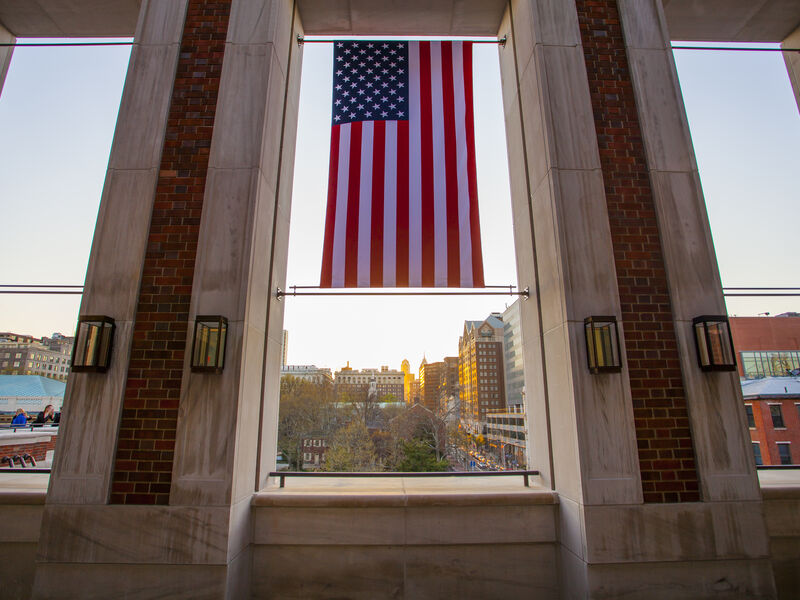
Museum of the American Revolution. Photo credit to C. Smyth.
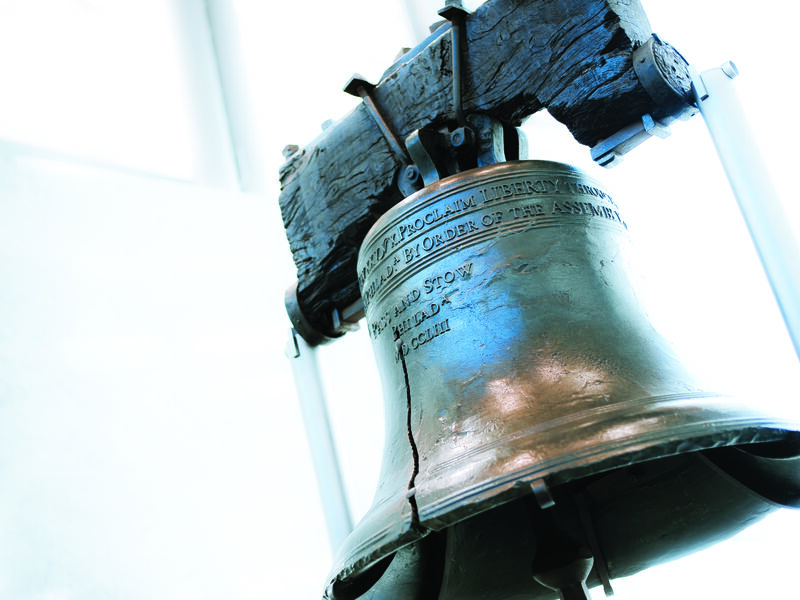
The Liberty Bell. Photo credit to J.S. Ruth for Visit Philadelphia.
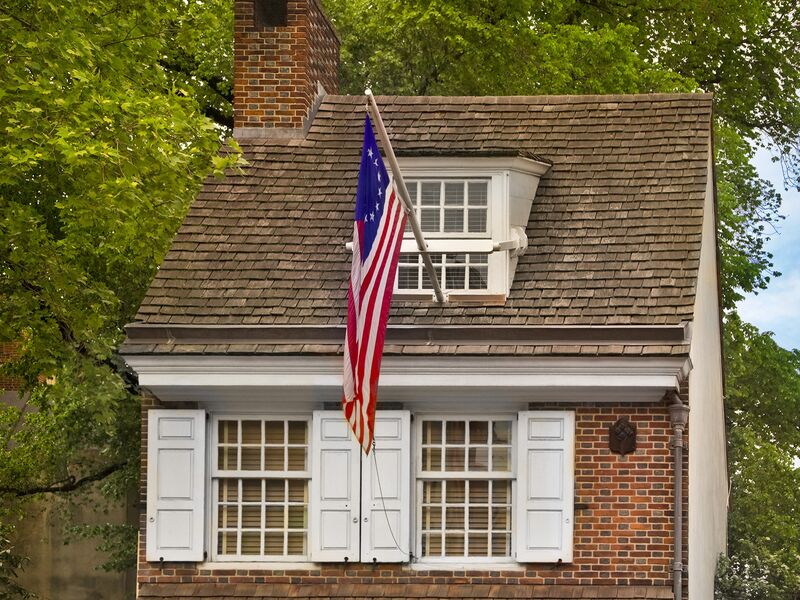
The Betsy Ross House. Photo credit to G. Widman for Visit Philadelphia.
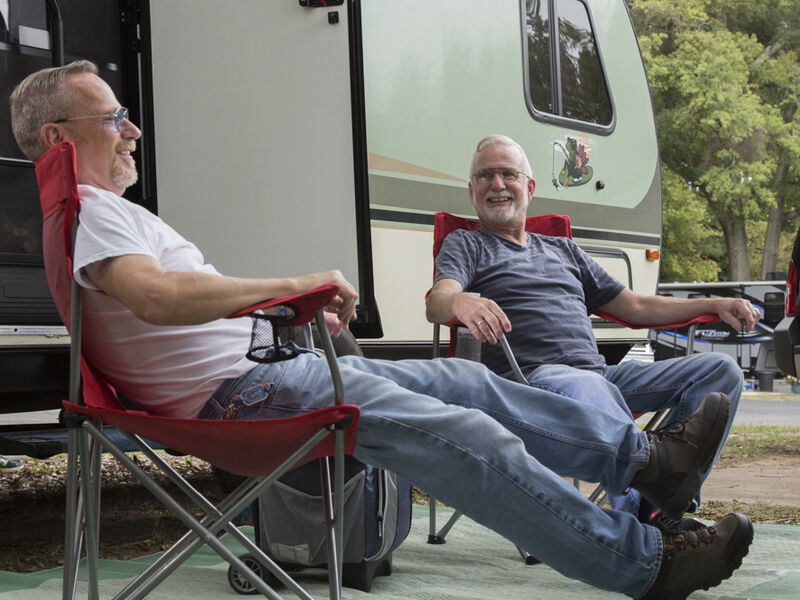
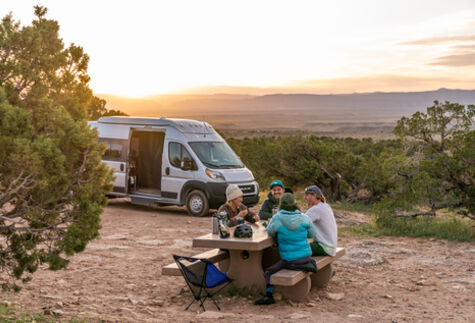
Travel companions relax outside of their RV.
The Museum of the American Revolution
Start with the basics by visiting The Museum of the American Revolution, which complements its exhibits with history classes and guided tours. Then head over to Independence Hall to see the room where the Declaration of Independence and the U.S. Constitution were both signed.
The Liberty Bell and Independence Hall
The Liberty Bell, which was used to summon citizens to hear the first public reading of the Declaration of Independence, is housed in a separate building next to Independence Hall.
Betsy Ross House
Also nearby is the Betsy Ross House, the seamstress many credit with sewing the first American flag.
Elfreth's Alley
Finish off the day at Elfreth's Alley, one of the oldest continually inhabited streets in America. The street dates back to 1703 and features an exceptional collection of early American structures built between 1720 and 1836. Most of the homes are privately owned, but two of them, #124 and #126, are used for the Elfreth's Alley Museum, run by the Elfreth's Alley Association. The Association was founded in 1934 to preserve and protect the Alley and tell the story of its inhabitants, who were primarily artisans and working-class laborers.
Where to Camp:
Jellystone Park Camp-Resort in Williamstown, New Jersey
Address: 117 Coles Mill Road, Williamstown, NJ 08094
Phone Number: (856) 629-5140Philadelphia South / Clarksboro KOA Holiday in Clarksboro, New Jersey
Address: 117 Timberlane Rd, Clarksboro, NJ 08020
Phone Numbers:
Reserve– (1-800) 562-1727
Info– (1-856) 423-6677Philadelphia / West Chester KOA in Coatesville
Address: 1659 Embreeville Road, Coatesville, PA 19320
Phone Numbers:
Reserve– (1-800) 562-1726
Info– (1-610) 486-0447
Day 2
The Benjamin Franklin Museum, the Mutter Museum, and the Simeone Foundation Museum
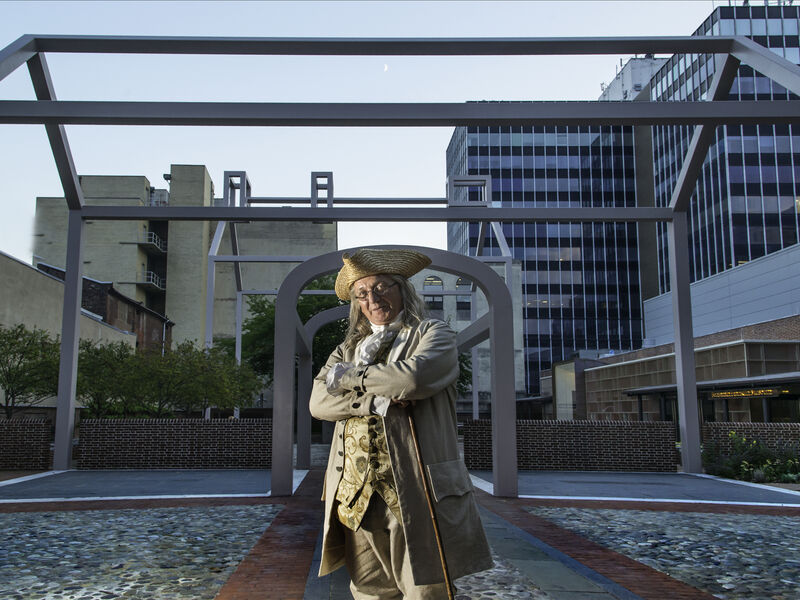
The Benjamin Franklin Museum. Photo credit to Rusty Kennedy for Greater Philadelphia Tourism Marketing Corporation.
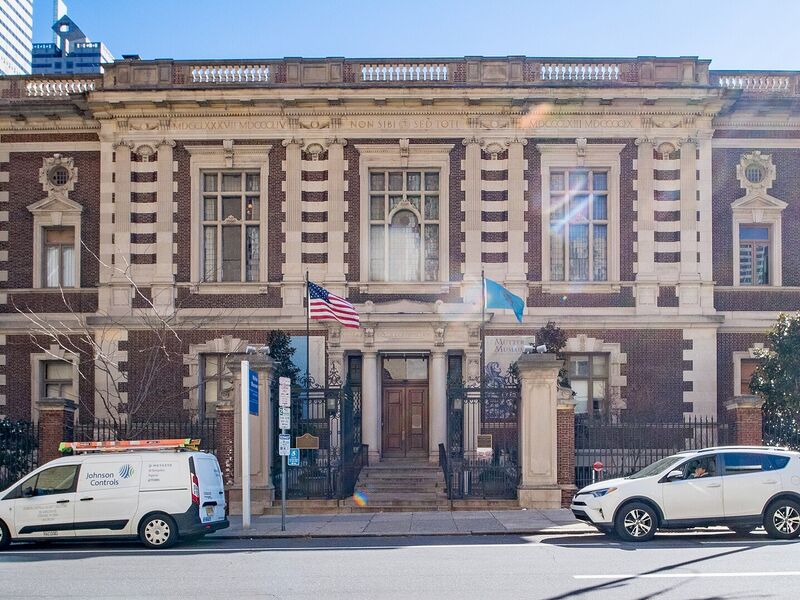
The Mutter Museum. Photo credit to Wikipedia.
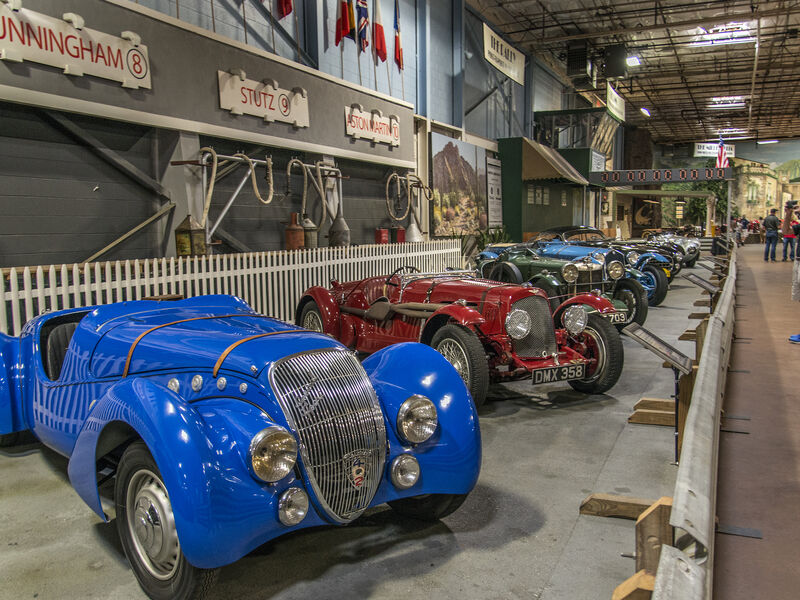
The Simeone Foundation Museum. Photo by Rusty Kennedy for Visit Philadelphia.
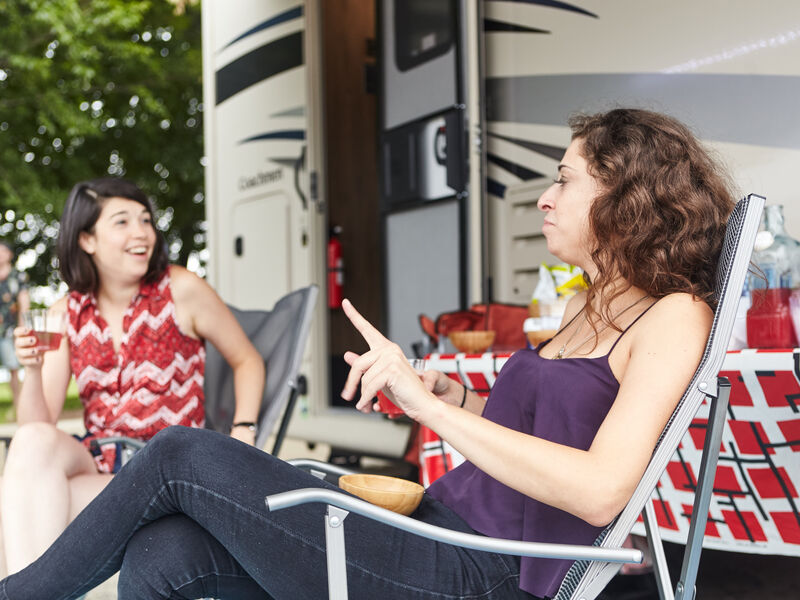
Travel companions relax outside their RV.
The Benjamin Franklin Museum
It’s hard to overestimate Benjamin Franklin’s impact as a Founding Father of the United States. Franklin was not only a political figure who edited and signed the Declaration of Independence. He also served as America’s first ambassador, and is also credited with many other achievements, such as launching America’s first newspaper, circulating library, public hospital, liberal arts academy, volunteer fire department, and more.
He was also internationally known for his discoveries in science and his inventions, which include the lightning rod, bifocals and swim fins. The museum highlights Franklin’s life and his many contributions to science, politics and journalism. Visitors can also explore the underground museum complex, which includes the remains of Franklin’s house. Franklin owned the house and print shop on Franklin Court.
The Mutter Museum
The Mutter Museum, founded in 1863 by Dr. Thomas Dent Mütter, is considered to be America’s finest museum of medical history. Museum displays include beautifully preserved collections of anatomical specimens, models, and medical instruments in a 19th-century “cabinet museum” setting.
The museum helps the public understand the mysteries and beauty of the human body and to appreciate the history of diagnosis and treatment of disease. The museum collection includes a specimen from John Wilkes Booth’s vertebra, a plaster cast and conjoined liver of the Siamese Twins, Chang and Eng, Dr. Joseph Hyrtl’s human skull collection, slides of Albert Einstein’s brain, and more.
The Simeone Foundation Museum
The Simeone Foundation Museum features 60 of the world’s rarest and most famous race cars from Alfa Romeo, Bentley, Mercedes-Benz, Jaguar, and Maserati. The collection includes a race car from 1909, a 1958 Aston Martin DBR1 that Stirling Moss drove to victory, and a 1938 Alfa Romeo, winner of the Mille Miglia, among others.
Where to Camp:
Jellystone Park Camp-Resort in Williamstown, New Jersey
Address: 117 Coles Mill Road, Williamstown, NJ 08094
Phone Number: (856) 629-5140Philadelphia South / Clarksboro KOA Holiday in Clarksboro, New Jersey
Address: 117 Timberlane Rd, Clarksboro, NJ 08020
Phone Numbers:
Reserve– (1-800) 562-1727
Info– (1-856) 423-6677Philadelphia / West Chester KOA in Coatesville
Address: 1659 Embreeville Road, Coatesville, PA 19320
Phone Numbers:
Reserve– (1-800) 562-1726
Info– (1-610) 486-0447
Day 3
The African American History Museum, the President’s House Exhibit, and the Kennett Underground Railroad Bus Tour
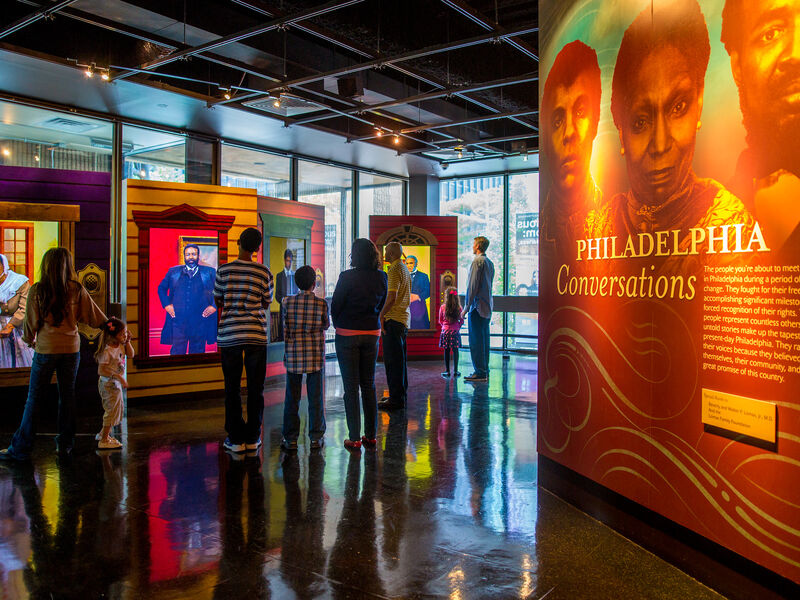
The African American History Museum. Photo credit to J. Fusco for Visit Philadelphia.
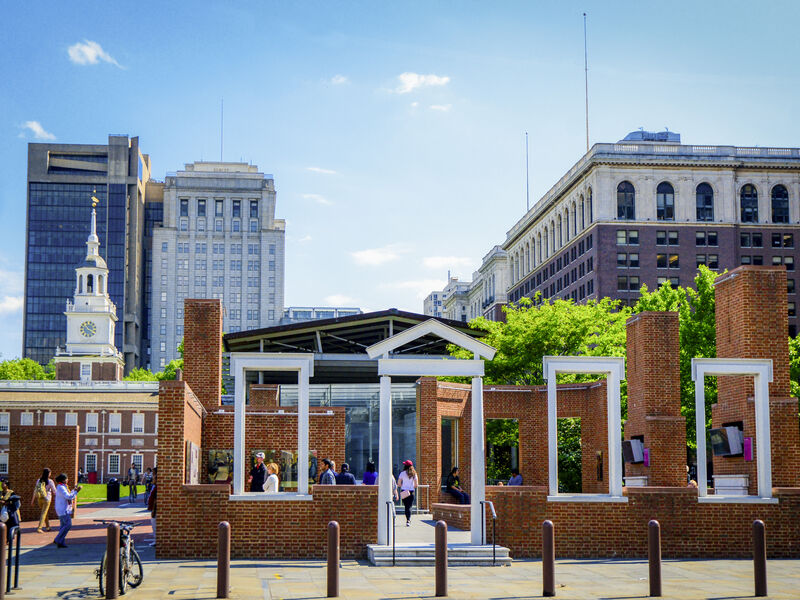
The President's House Exhibit. Photo credit to Miles Kennedy.
The African American History Museum
Philadelphia’s African American Museum tells the story of African Americans through family life, the Civil Rights movement, arts and entertainment, sports, medicine, architecture, politics, religion, law, and technology.
The President’s House Exhibit
After visiting the African American Museum, take a walk back to the Liberty Bell Center to check out an outdoor exhibit next door titled "The President's House." The exhibit tells the story of the paradox of liberty and enslavement coexisting in one home — and the nation — at the time of America’s founding.
George Washington and John Adams both lived in the nation’s first executive mansion in Philadelphia during their terms. However, Washington brought nine of his slaves from Mount Vernon to work at the executive mansion, which once stood on the site of the outdoor exhibit.
Kennett Square
About an hour’s drive west of Philadelphia in Kennett Square, you can take a two-hour Underground Railroad Heritage Bus Tour. These family-friendly tours include Underground Railroad sites, historic homes, and Quaker meetinghouses as well as information about anti-slavery activities in the Kennett Square area.
Where to Camp:
Jellystone Park Camp-Resort in Williamstown, New Jersey
Address: 117 Coles Mill Road, Williamstown, NJ 08094
Phone Number: (856) 629-5140Philadelphia South / Clarksboro KOA Holiday in Clarksboro, New Jersey
Address: 117 Timberlane Rd, Clarksboro, NJ 08020
Phone Numbers:
Reserve– (1-800) 562-1727
Info– (1-856) 423-6677Philadelphia / West Chester KOA in Coatesville
Address: 1659 Embreeville Road, Coatesville, PA 19320
Phone Numbers:
Reserve– (1-800) 562-1726
Info– (1-610) 486-0447
Day 4
The Philadelphia Museum of Art
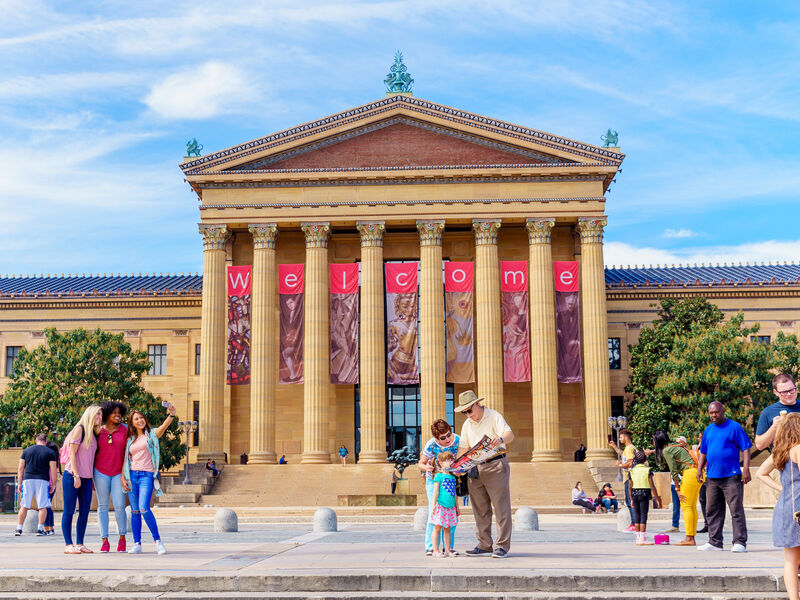
The Philadelphia Museum of Art. Photo credit to J. Fusco for Visit Philadelphia.
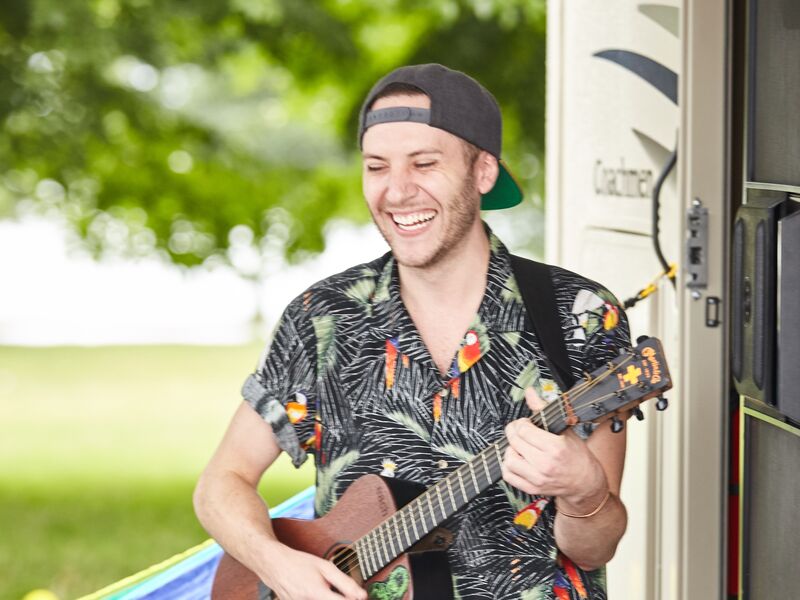
An RVer plays the guitar for his companions.
Philadelphia Museum of Art
The Philadelphia Museum of Art explores various aspects of both U.S. and world history, including immigration, colonialism, trade, and what the museum calls “underrepresented narratives.” The museum’s holdings encompass more than 240,000 works spanning 2,000 years, including pieces from the ancient world, medieval times, the Renaissance, the Impressionist movement, and modern day. The museum’s collections include paintings by Renoir, Van Gogh, and Picasso
Where to Camp:
Jellystone Park Camp-Resort in Williamstown, New Jersey
Address: 117 Coles Mill Road, Williamstown, NJ 08094
Phone Number: (856) 629-5140Philadelphia South / Clarksboro KOA Holiday in Clarksboro, New Jersey
Address: 117 Timberlane Rd, Clarksboro, NJ 08020
Phone Numbers:
Reserve– (1-800) 562-1727
Info– (1-856) 423-6677Philadelphia / West Chester KOA in Coatesville
Address: 1659 Embreeville Road, Coatesville, PA 19320
Phone Numbers:
Reserve– (1-800) 562-1726
Info– (1-610) 486-0447
Day 5
The Frankford Avenue Bridge and Fort Mifflin
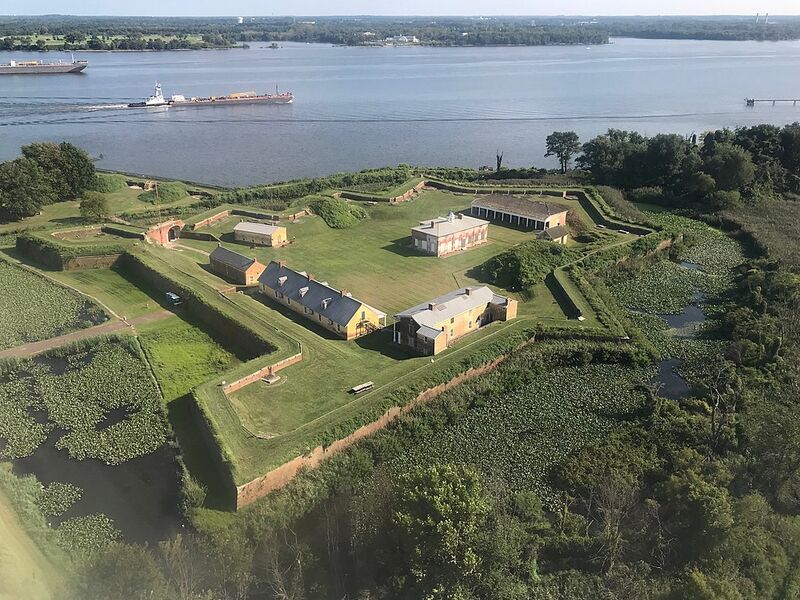
Fort Mifflin. Photo credit to Wikipedia.
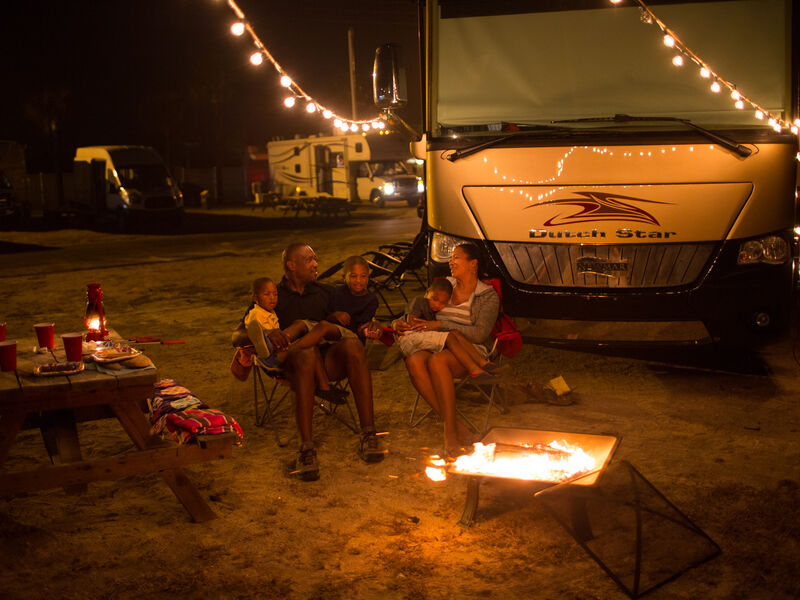
A family relaxes together next to the campfire.
Frankford Avenue Bridge
The Frankford Avenue Bridge was built in 1697 in the Holmesburg section of northeast Philadelphia. The American Society of Civil Engineers describes the bridge as the first known stone arch built in the U.S., and probably the oldest stone bridge in the country. Delegates from the First and Second Continental Congresses crossed over the bridge enroute to Philadelphia. George Washington also crossed the bridge in 1789 as he made his way to his first presidential inauguration in New York.
Fort Mifflin
Fort Mifflin was built in 1771 and is considered the oldest active military facility in the United States and the nation’s only operating base that predates the Declaration of Independence. The fort survived the greatest bombardment of the American Revolution, enduring more than 10,000 cannonballs fired by British forces. The fort showcases British-made Brown Bess rifles and other war instruments.
Fort Mifflin is open to visitors from March through December. Visitors can tour the historic grounds and Revolution-era buildings and watch reenactments. If you contact the fort in advance, you can investigate paranormal activity on guided candlelight tours, or take part in “open investigation evenings” and overnight sleepovers, since Fort Mifflin is considered to be one of the most haunted locations in the country.
Where to Camp:
Jellystone Park Camp-Resort in Williamstown, New Jersey
Address: 117 Coles Mill Road, Williamstown, NJ 08094
Phone Number: (856) 629-5140Philadelphia South / Clarksboro KOA Holiday in Clarksboro, New Jersey
Address: 117 Timberlane Rd, Clarksboro, NJ 08020
Phone Numbers:
Reserve– (1-800) 562-1727
Info– (1-856) 423-6677Philadelphia / West Chester KOA in Coatesville
Address: 1659 Embreeville Road, Coatesville, PA 19320
Phone Numbers:
Reserve– (1-800) 562-1726
Info– (1-610) 486-0447
Short On Time?
While many Philadelphia visitors focus on Independence Hall and the Liberty Bell, the city actually has enough attractions to keep visitors busy for at least five days. If you aren't able to stay that long, here are the must-sees:
1) The Philadelphia Museum of Art
2) The Liberty Bell
3) The African American History Museum
5) The Mutter Museum
Final Thoughts
Give yourself enough time to really soak in Philadelphia’s history and be sure to allow plenty of time to arrive in the city from campgrounds in outlying areas. Your campground hosts can advise you on the best times to depart and return for each day’s activities.
Go RVing would like to thank Visit Philly for their recommendations and assets for this RV-2-50 travel itinerary.