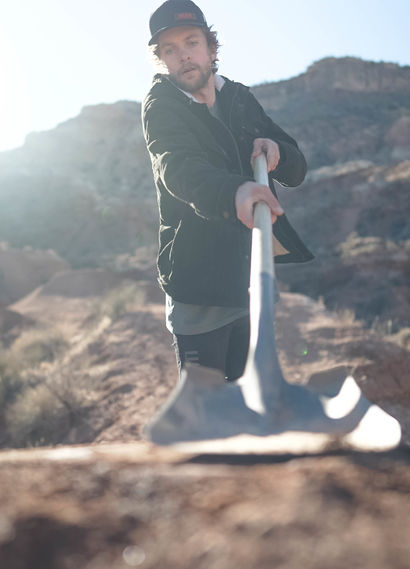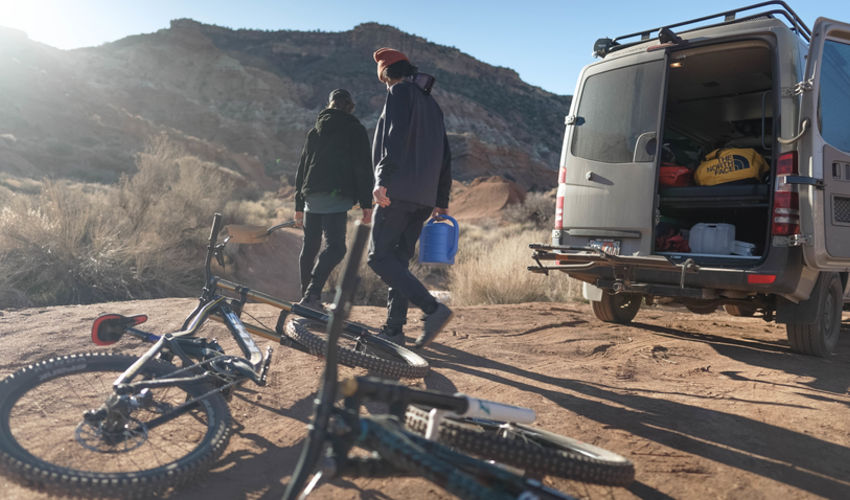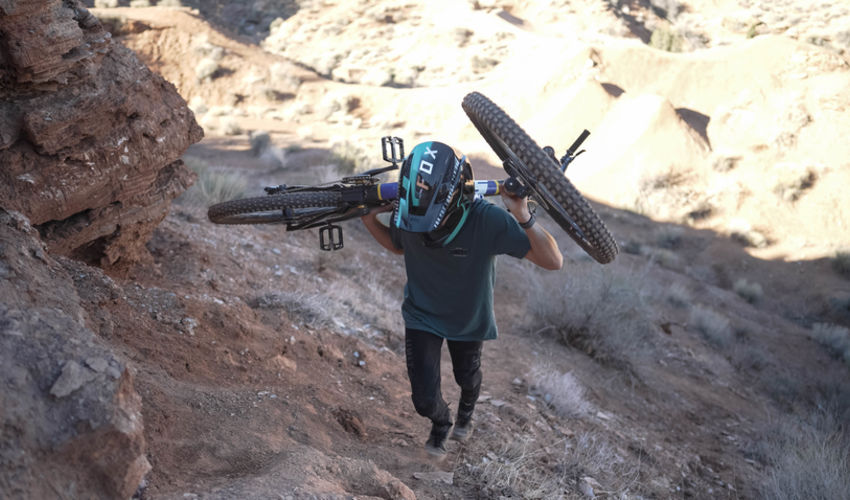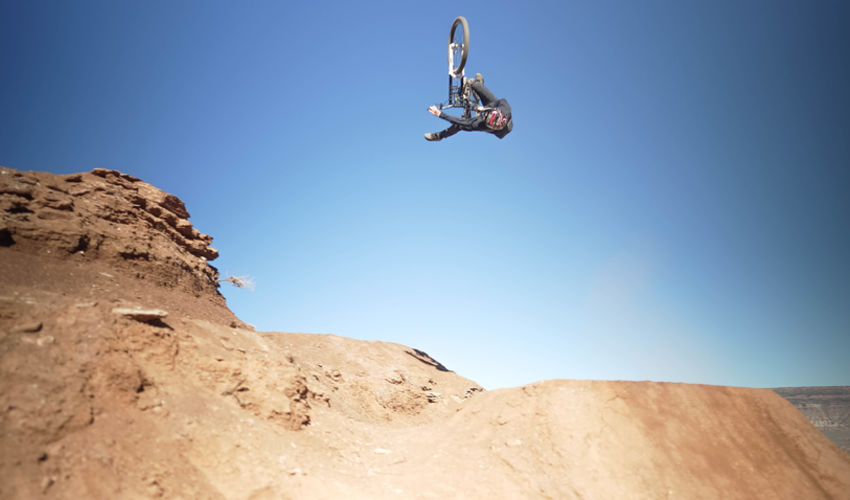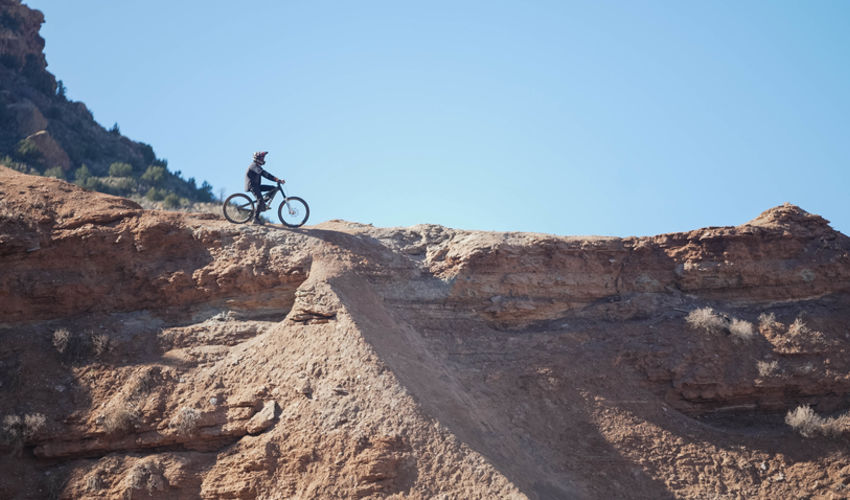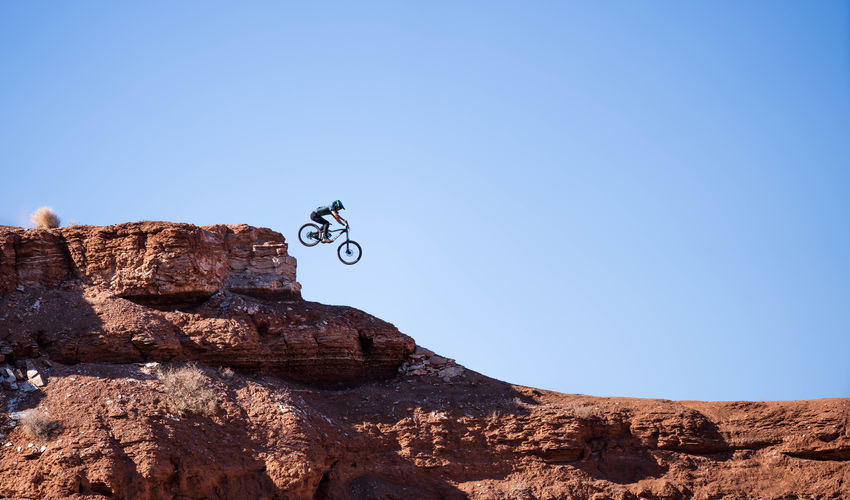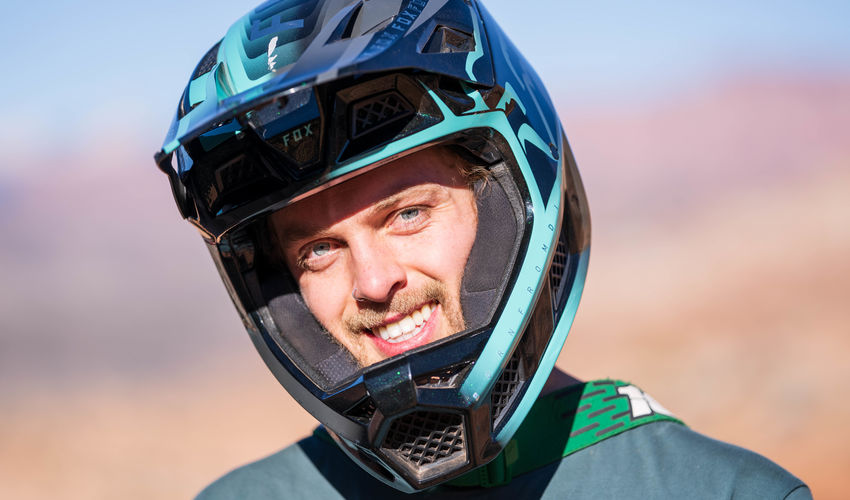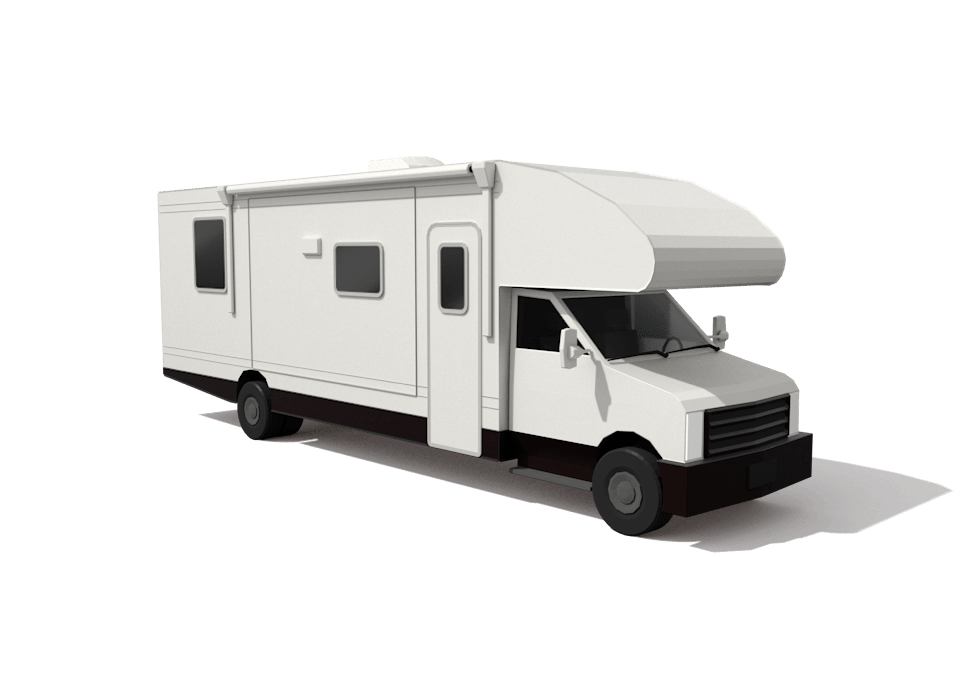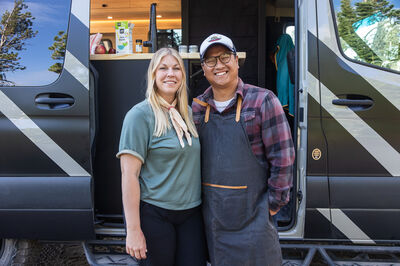



For professional freeriding mountain biker Reed Boggs, training on the terrain in the Red Rocks Region of Utah has shaped his riding style and his mindset. Rugged, exposed, technical, and fast, the Utah desert demands precision and courage. So, when Reed and his friend Dylan planned a weekend to sharpen their skills and chase big lines, they chose the setup that would give them the most freedom possible: a Class B RV.
When the trails you want to ride are remote and aren’t always on the map, and the terrain is unforgiving, using an RV to stage and sleep gives riders lots of advantages.
Rolling Out: Why an RV Changes the Ride
Mountain biking in southern Utah isn’t like showing up to a lift-access park. It’s early alarms, long shuttle roads, dusty staging areas, and stretches of terrain where services (and cell coverage) are miles away. Having a self-contained RV meant Reed and Dylan could basecamp exactly where they wanted — no hotel check-ins, no rigid schedules, no backtracking into town.
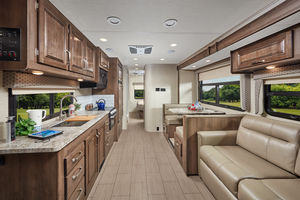
With a Class B van, they carried everything they needed and wanted: bikes, tools, hydration packs, recovery gear, meals, safety equipment, and a comfortable place to rest and shelter from the sun. The morning routine offered a quicker opportunity to hit the trails before others–especially with those dramatic sunrise views.
The ability to go off-grid opened up options. Instead of riding only the most trafficked zones, they explored lesser-known areas and pushed into new lines. In a landscape as vast as Utah’s high desert, that kind of mobility means progression–something both Reed and Dylan were seeking.
King Kong: Speed, Exposure, and Commitment
One of their primary objectives? The legendary King Kong trail near Hurricane: oftentimes referred to as the world’s toughest MTB trail.
Known for its high-speed sections, steep rock rolls, technical drops, and exposure, King Kong is a proving ground. There’s no easing into it. You commit, or you don’t.
For riders like Reed and Dylan, trails like King Kong are where skill meets instinct. The sandstone offers incredible grip, but the consequences are real. Dialing in speed, body position, and line choice takes repetition. That means multiple runs, long shuttles, and recovery time in between.
That’s where the nearby RV shines.
Instead of hanging out in a dusty parking lot or driving back and forth from town, they reset at camp: hydrate, refuel, review footage, make adjustments, and rest in air-conditioned comfort when the desert heat peaks before heading out again.
It’s not just about comfort — it’s about sustainability. Being able to recover properly between laps keeps riders sharp and reduces risk.
Freedom to Explore New Zones
Utah’s riding zones stretch across vast public lands, from slickrock playgrounds to steep desert mesas. Having an RV meant Reed and Dylan weren’t locked into one trail system. If conditions shifted or curiosity pulled them elsewhere, they could pivot instantly.
That freedom encourages experimentation on new routes, different terrain, steeper drops, and around new people riding the same lines you are. When your home base moves with you, your comfort zone expands. In a traditional travel setup, logistics can limit ambition. With an RV, logistics support it, and you can more easily achieve flow state.
Off-Grid and Creating Community in Real Time
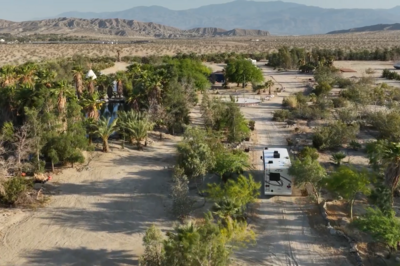
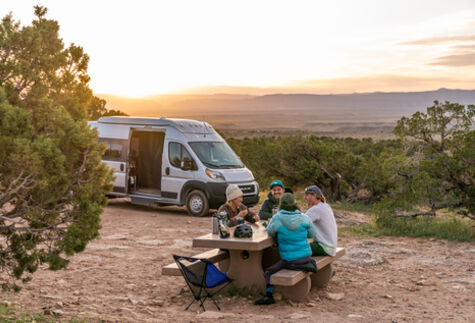
Boondocking in the Utah desert gave Reed and Dylan something increasingly rare: space to unplug and disconnect from the noise of daily life. Going off-grid stripped the weekend down to its essentials and reconnected them to why they ride in the first place.
Evenings were simple — cooking dinner at camp, replaying the day’s biggest sends, watching the sunset wash the cliffs in gold. But disconnection didn’t mean isolation. In fact, it created the opposite.
Out in the desert, community feels more intentional. Trailheads become gathering points and real-life conversation for a mix of riders — weekend warriors, van-lifers, and pros dialing in lines for upcoming races. Stories are shared. Kudos are given freely. Encouragement flows as naturally as the riding itself.
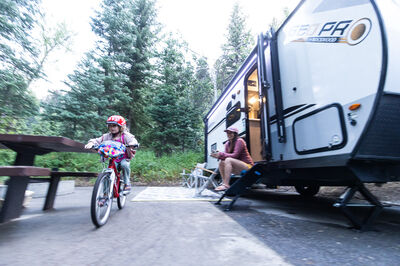
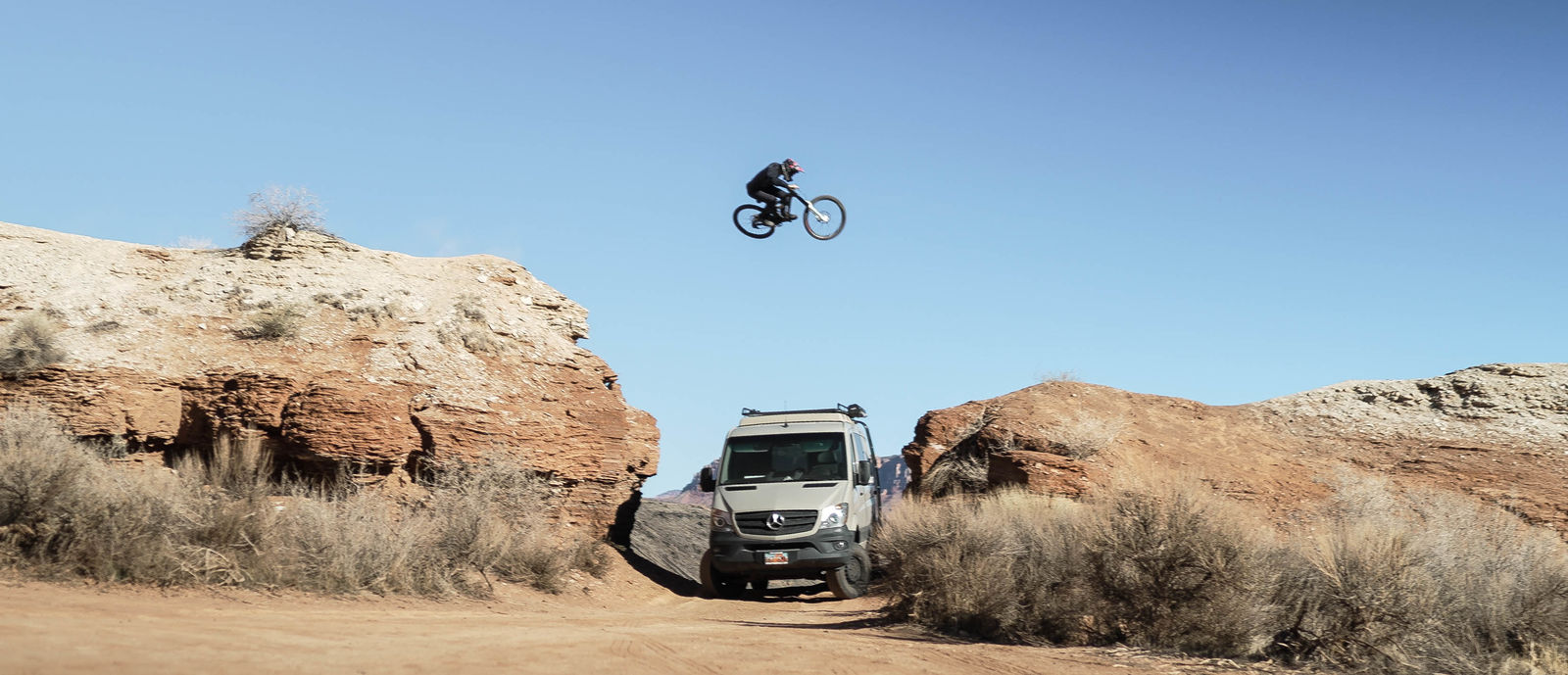
An RV becomes the anchor for that connection — a shared hub where riders gather to laugh, troubleshoot, borrow a tool, compare tire pressure for sandstone grip, talk through a high-consequence line, or watch riders jump over the stationed RVs. It’s a temporary desert neighborhood built around a common passion — a real life Trailforks thread comes to life.
And in mountain biking, connection matters and trust is currency. Trusting your equipment, your skill and preparation, and those around you (especially in cases of emergency) matter a great deal in all terrain, but especially when you’re riding remote and technical terrain. Spending time together on and off the trail deepens that trust.
Final Thoughts
After a wild weekend of freeriding and navigating technical descents, Reed and Dylan made memories that lasted a lifetime, formed not only new friendships with other riders but deepened their bond, and strengthened their own confidence and abilities in the saddle.